From a Plain Match-3 to a Farm Full of Hungry Animals: How to Give Your Game a Reason to Play
Make a match-3 game on your phone in one sentence, then give every match a reason with one edit. Here's the method, shown with a farm game.
In this article
Match-3 games are easy to love and easy to forget. Swap two pieces, clear a row, watch the board tumble. It feels good, but nothing in the game needs you. The best match-3 games add a reason to every match: a goal, a story, someone waiting.
This guide shows how to make a match-3 game on Flikk in one sentence, and then give it that reason with one edit. Our example is a farm game that starts as a plain board of vegetables and becomes a farm full of hungry animals.
Quick note: Flikk is our app. All pictures in this guide are AI illustrations of how a game can grow. They're not screenshots from the app, and your own game will look different.
Step 1: Describe the game in one sentence
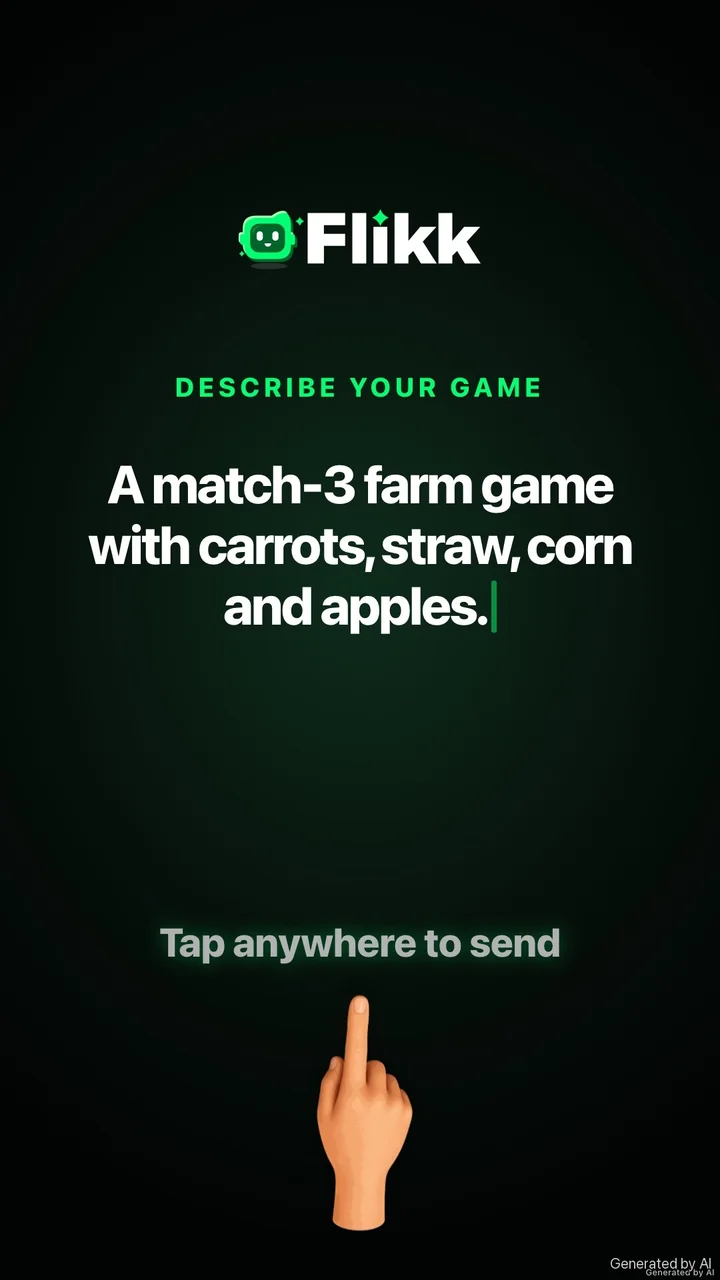
Everything starts in Flikk's Create tab, with a sentence. No code, no design document. For a farm match-3, a good start would be:
"A match-3 farm game with carrots, straw, corn and apples."
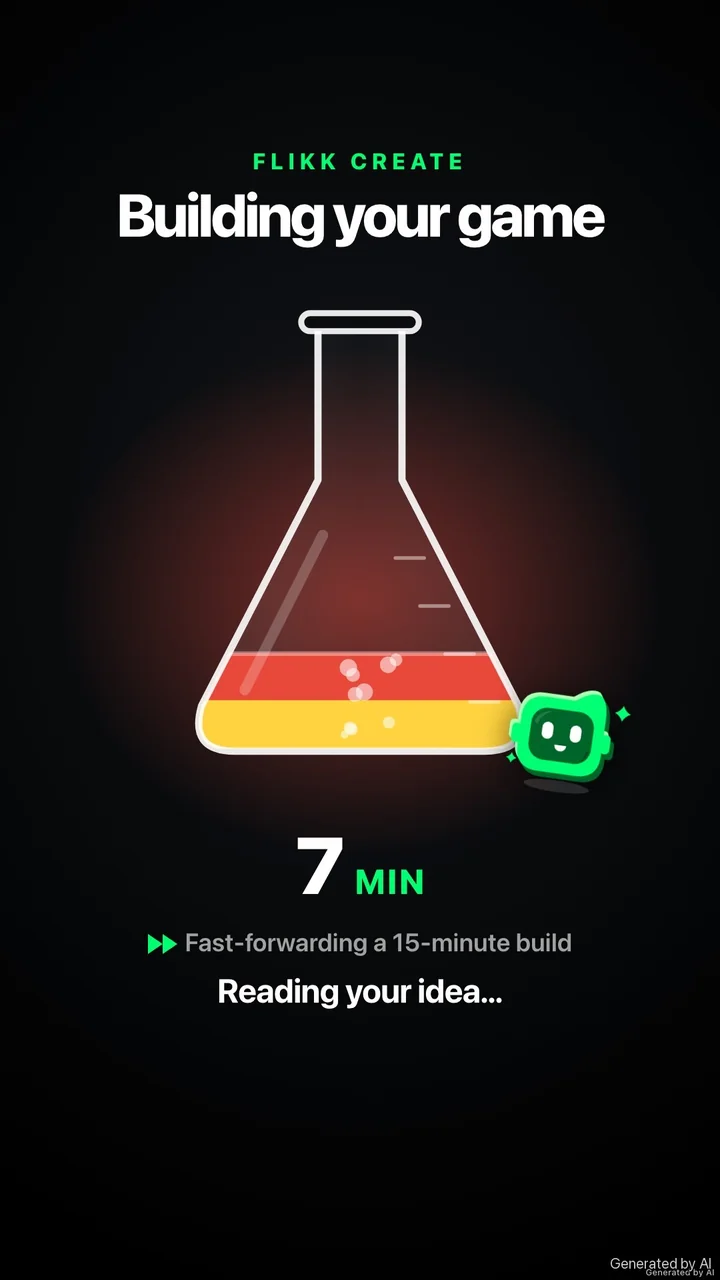
Next, you pick a look for your game, an asset pack with ready-made art, or none at all if you want the AI to draw everything. For a match-3 board, a pack seen straight from above fits best. Flikk then writes a short game plan you can check before it builds anything. A build takes about 15 minutes: long enough for a coffee, short enough to try an idea the same afternoon you had it.
Step 2: Play version 1, only the matching game
A one-sentence idea gives you a one-sentence game. Picture a first version like this: a wooden tray of carrots, hay bales, corn, apples and cabbages on a sunny meadow. Swap two neighbors to line up three, and they clear.
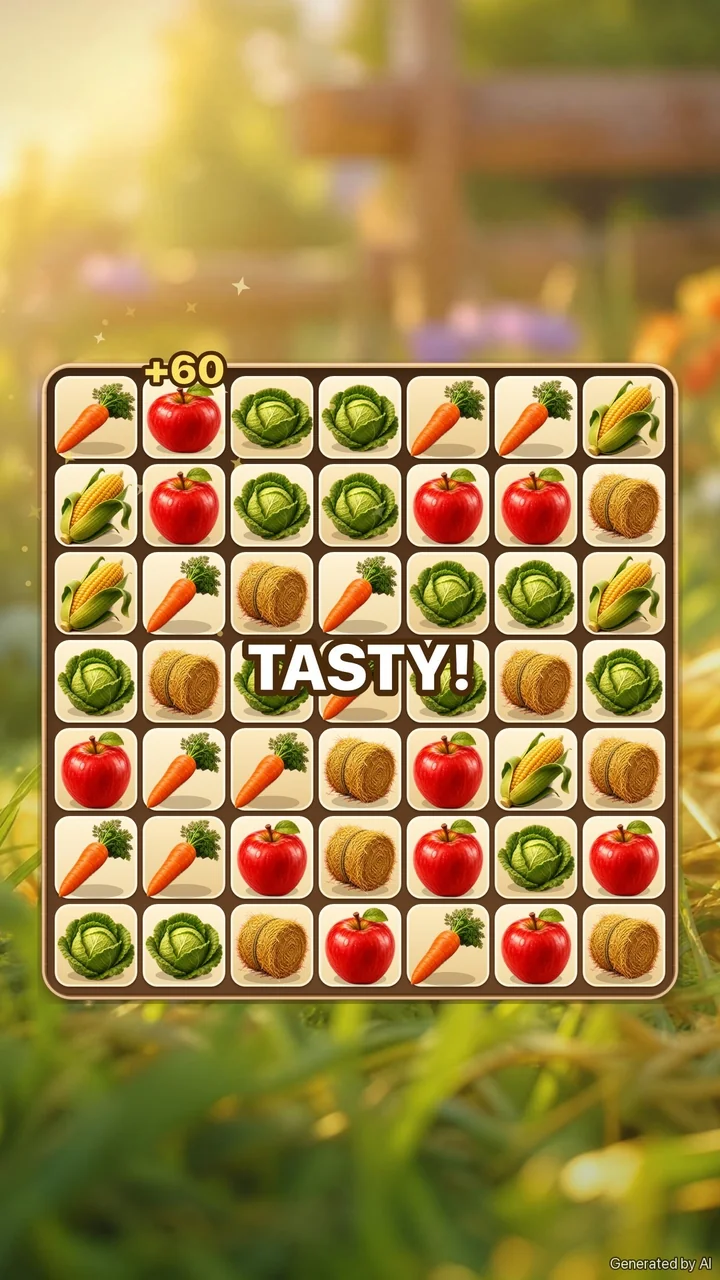
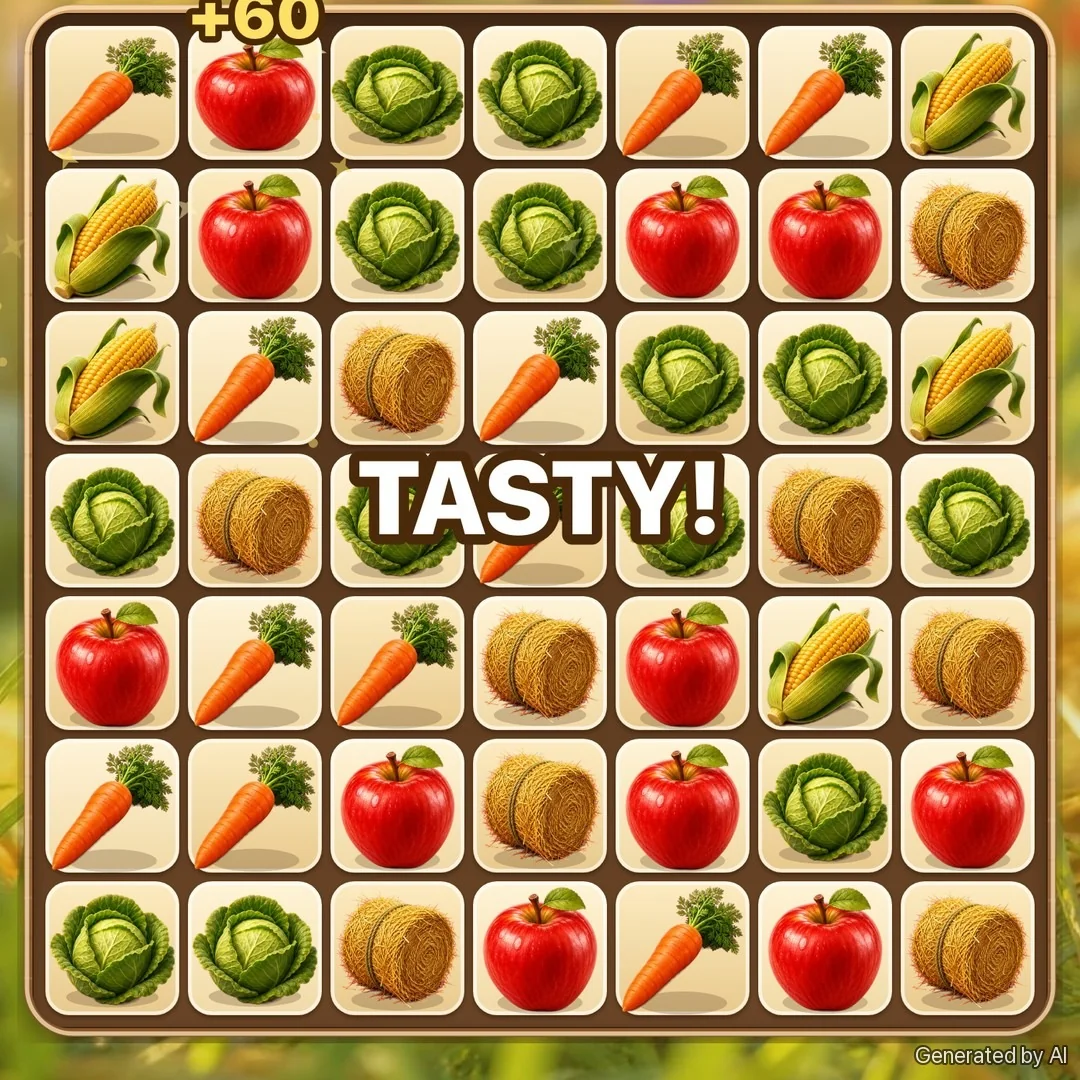
It plays, and it looks the part. But it's just a board. Nothing is waiting for the food. That's normal for a first build, and it's exactly what the next step fixes.
Tip: Play your first version for a minute before you change anything. You'll notice what's missing much faster by playing than by thinking about it.
Step 3: One edit, give every match a reason
Changing your game doesn't mean starting over. Open your game's page, go to the Make Edits tab, and say what you want in plain words:
"Add a little farm on top with hungry animals that I feed by matching their food."
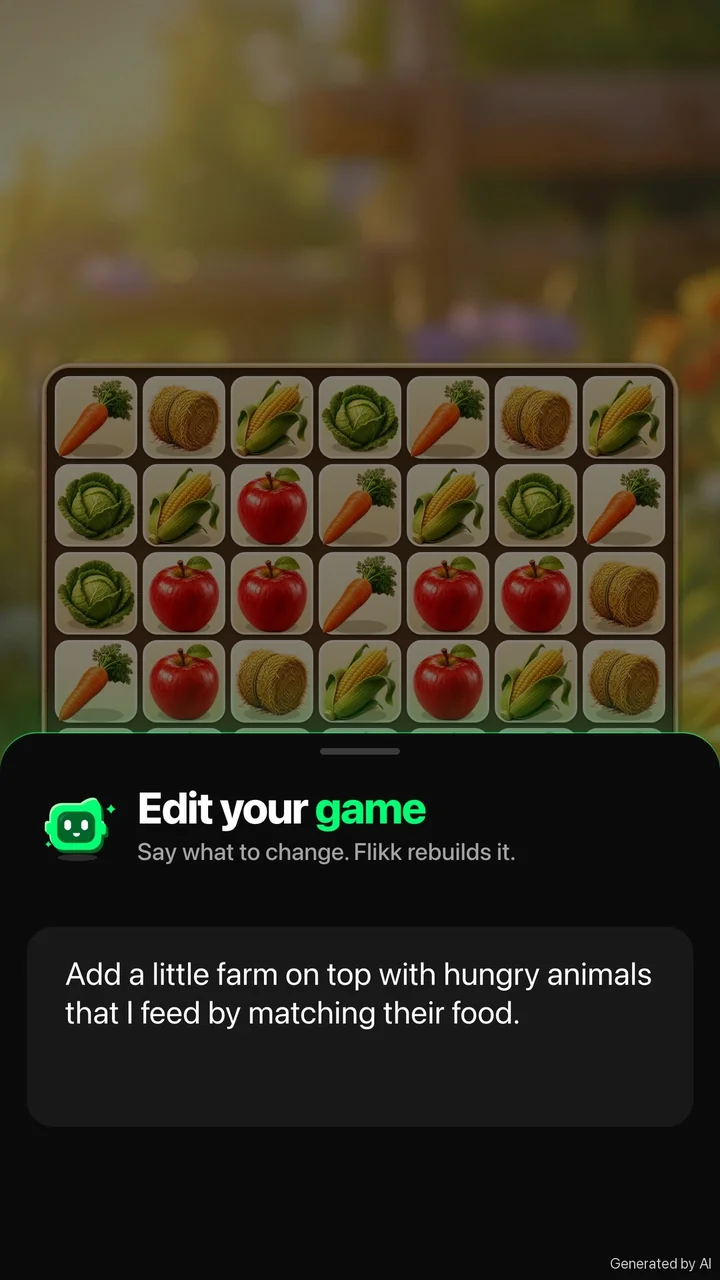
Flikk first shows you a plan of the change and its cost (25 Tokens per edit as of October 2026). Tap Build it, and about 5 minutes later your game has the change. The version people are playing stays the same until the new one is ready.
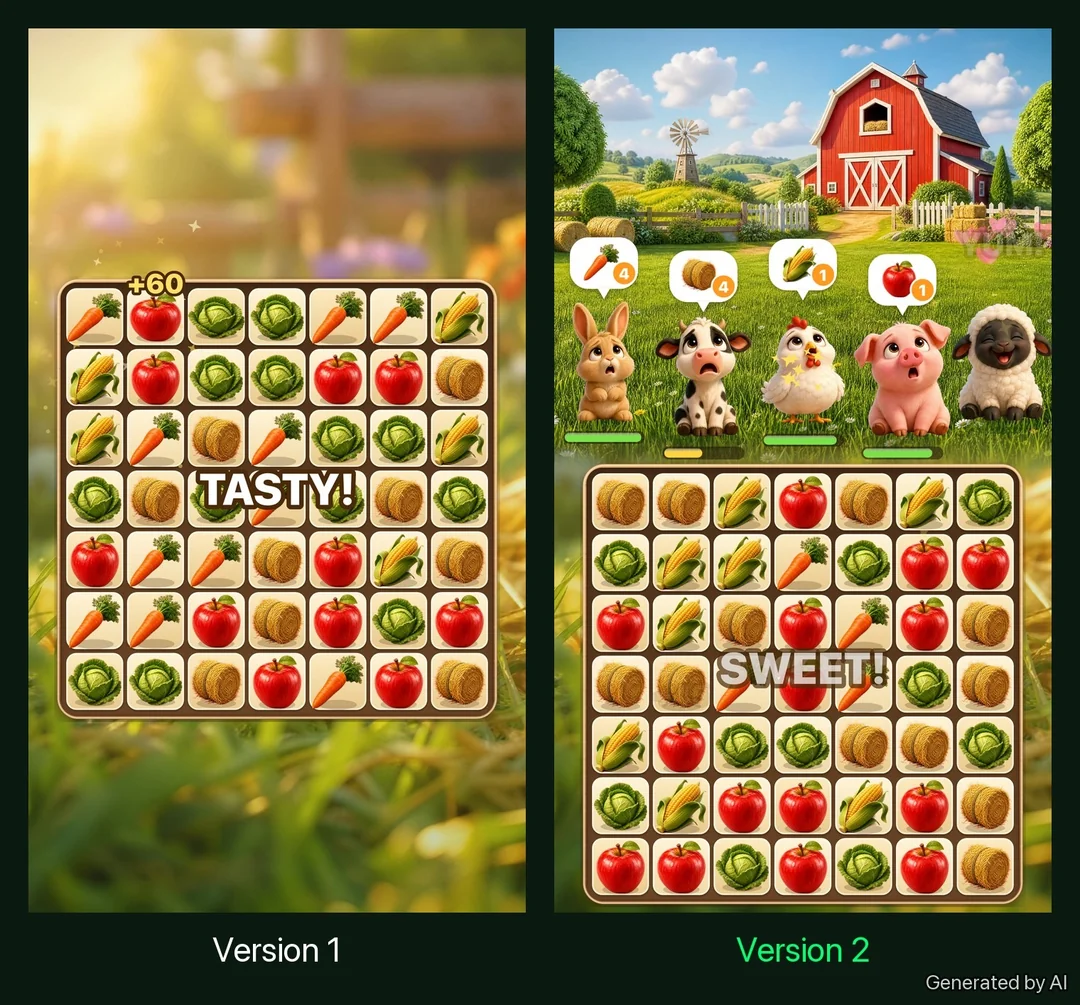
Here's what that one edit could turn the game into:
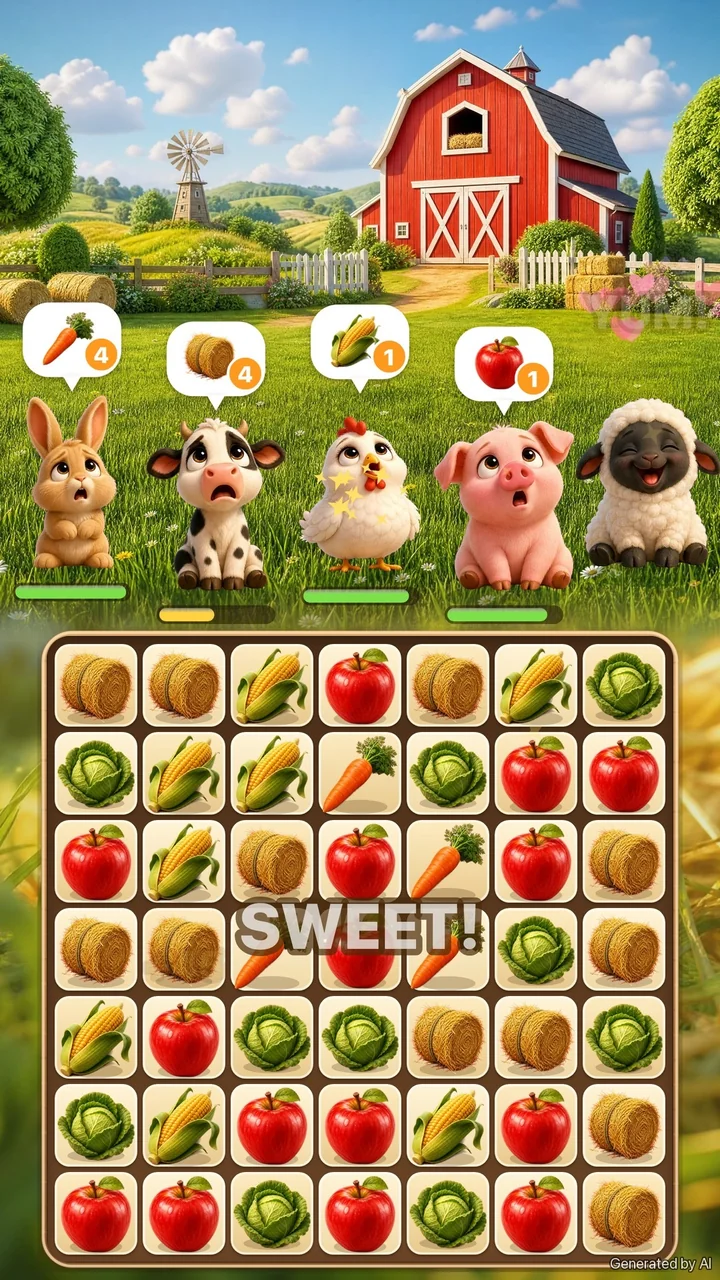
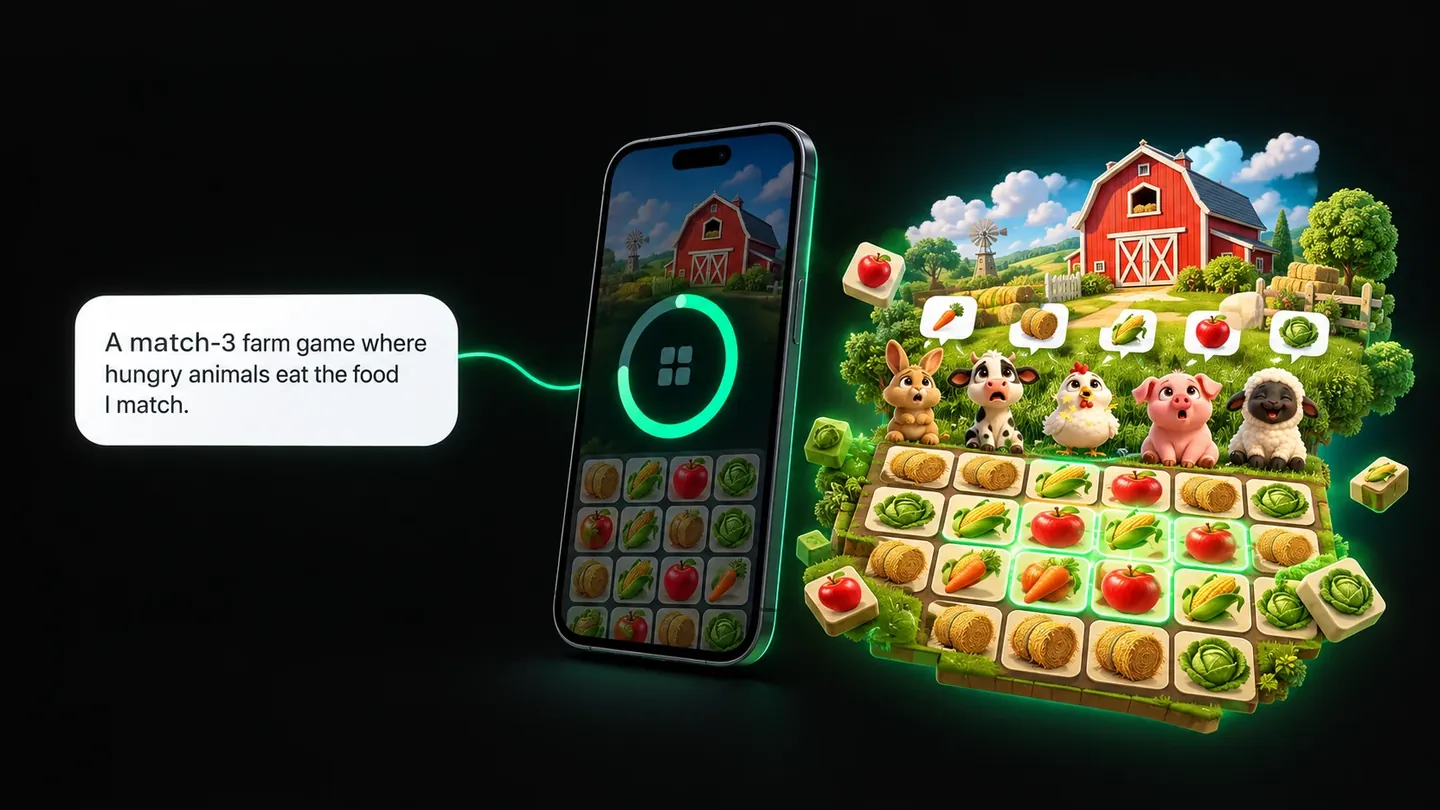
The same board with the same rules, but now there's a farm above it: a red barn, a windmill, green hills, and a bunny, a calf, a hen, a piglet and a lamb, each with a wish bubble over its head. The bunny wants carrots, the calf wants hay, the hen wants corn, the piglet wants apples and the lamb wants cabbage.
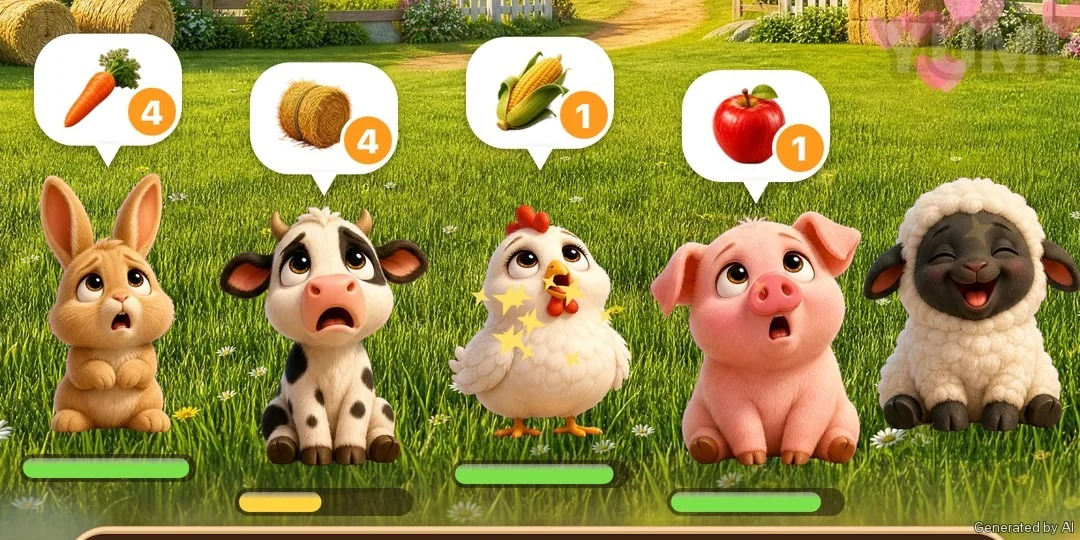
Now every match means something. Match the food, and it goes to the animal that asked for it.
Will your edit give you all of that? Maybe not on the first try. Flikk sometimes leaves part of a request out, and tells you why. Play the new version, see what you got, and ask again for what's still missing.
Step 4 (optional): add a little pressure
A goal makes a game meaningful. A little pressure makes it exciting. A second edit could make the animals impatient:
"Give every animal a bar that slowly empties while it waits. If it waits too long, it gets sad and leaves the farm."
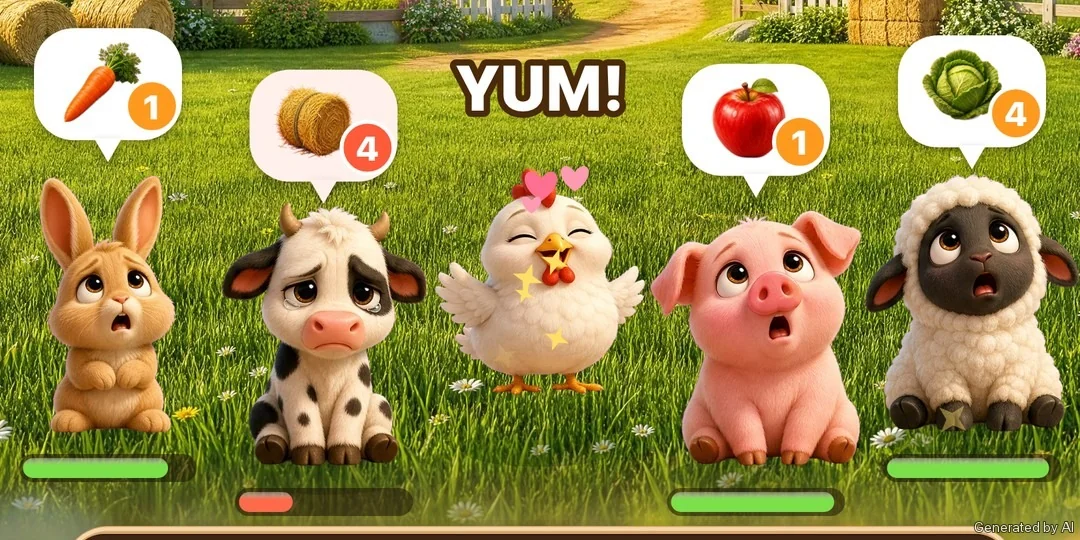
That one change turns a calm puzzle into a real decision: you no longer ask what can I match? but what should I match first?
Or start with the bigger idea
You don't have to grow the game step by step. You can also describe the richer version right away, in one sentence:
"A match-3 farm game where hungry animals eat the food I match."
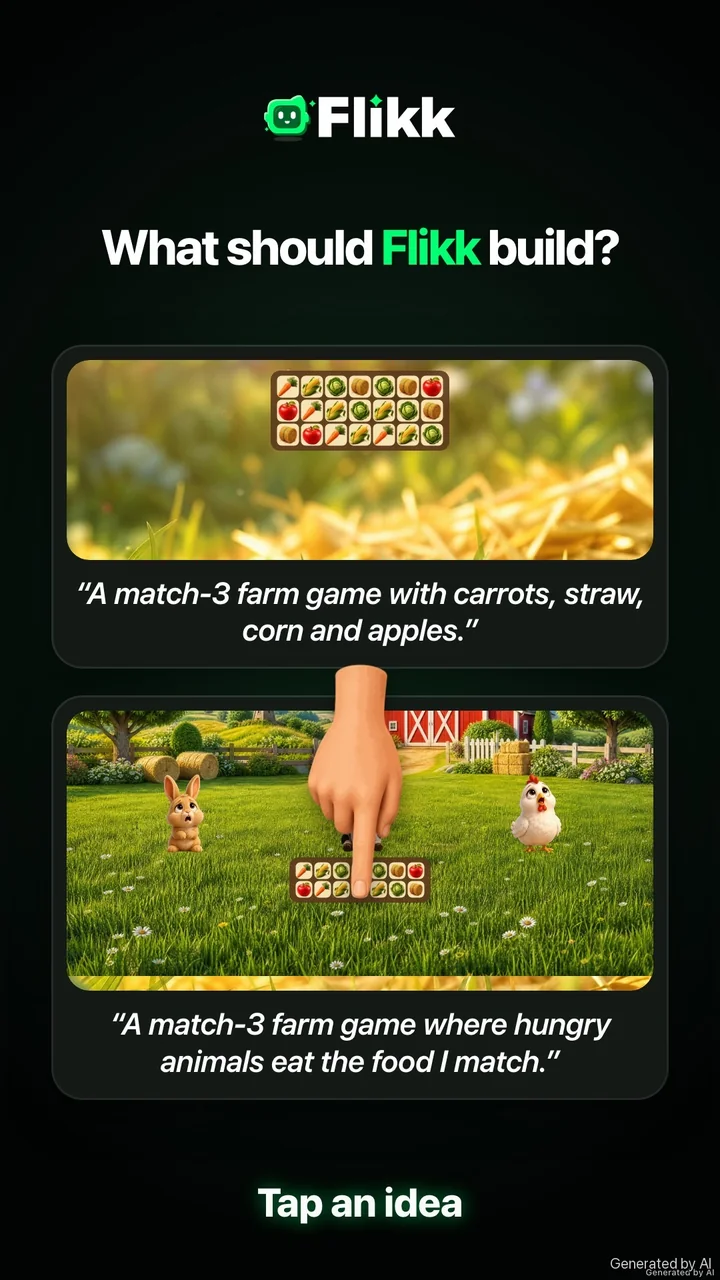
Both ways work. Starting small makes it easier to see what each change adds. Starting big gets you to a richer game faster. Either way, you can keep changing it with edits.
Why the hungry animals work
The farm doesn't change how the matching works. It changes why you match. In game design terms, it adds clear goals to the core loop: each animal is a small, visible target that's only a few matches away. The waiting bar adds a lose condition, and that gives the game tension.
Big match-3 games work the same way. Candy Crush Saga does this well: most levels don't just ask for points. They give you a goal, like clearing all the jelly from the board, bringing ingredients down to the bottom, or collecting a set number of one candy, all within a limited number of moves. The matching is the same in every level. The goal is what makes each level feel different, and the move limit is what makes you think before you swap.
Hungry animals are the same idea in a friendlier package. Each wish bubble is a small order, and the waiting bar works like a move limit you can see.
The same trick works for any match-3 theme:
- A bakery: customers order cakes, and you match the ingredients.
- A space station: robots need parts, and you match the bolts and batteries.
- A Halloween game: ghosts want candy before midnight.
These are ideas, not tested prompts. Try one, play it, and change what doesn't work.
Five tips for a great game
- Start with one sentence. Small ideas are the easiest to play and to improve.
- Play before you edit. What your game is missing shows up in a minute of play.
- Change one thing per edit. One clear change (here: a farm with hungry animals) is easier to judge than five at once.
- Give every action a reason. A match is fine. A match that feeds a hungry bunny is better.
- Add a little pressure, not a lot. A bar that slowly empties is enough to make players hurry.
Try it yourself
Flikk is free to start. Open the Create tab, describe your match-3 game in one sentence, play it, and tell Flikk what to change. New to Flikk? Our beginner's guide walks you through every step, and the farm glow-up guide shows the same method with a cozy farm game.
Collect Flikk Points while you play other people's games, and turn them into Tokens to make and edit your own.
What game would you build?
Download Flikk on iOS · Download Flikk on Android
FAQ
How do I make a match-3 game without coding?
On Flikk, you describe it in one sentence, for example "A match-3 farm game with carrots, straw, corn and apples." Pick a look, check the game plan Flikk writes, and tap Build it. About 15 minutes later you can play it, and you can change it with Make Edits.
How do I make a match-3 game more fun?
Give every match a reason. Add something that needs the pieces you match, like animals that want food or customers who order cakes, and a little time pressure. That turns "what can I match?" into "what should I match first?"
Can I change my game after it's built?
Yes. Open your game's page, go to the Make Edits tab and describe what should be different. An edit takes about 5 minutes, and players keep the old version until the new one is ready.
How much does it cost?
Flikk is free on iOS and Android, and making games is free to start. As of October 2026, a new game costs 100 Tokens and each edit costs 25 Tokens. You can buy Tokens or turn Flikk Points into Tokens. Flikk is available in the US.