From a Plain Match-3 to a Flood Rescue: How to Make Your Game More Exciting
A game gets exciting when something is at stake. Here's how to add tension to a match-3 game with a few edits, shown with a flood rescue.
In this article
A game gets exciting when something can go wrong. A match-3 board on its own is relaxing: swap two tiles, clear a row, watch the rest tumble down. It feels good, but nothing is at stake. Add water that keeps rising around a house full of people, and suddenly every match counts.
This guide shows how to make a game more exciting with a few edits on Flikk. Our example starts as a plain match-3 and becomes a flood rescue: first with a goal, then harder, then dramatic. Each step is one sentence.
Quick note: Flikk is our app. All pictures in this guide are AI illustrations of how a game can grow. They're not screenshots from the app, and your own game will look different. The prompts are examples you can try.
Step 1: Start with only the matching game
Everything starts in Flikk's Create tab, with one sentence. For a flood rescue, start with just the board:
"A match-3 game with sandbags, pumps, buckets, life rings and rescue boats."
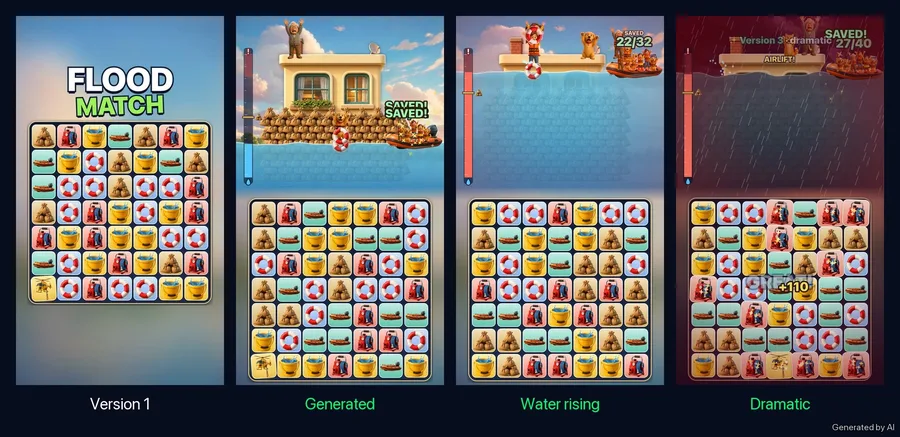
Flikk writes a short game plan you can check, then builds the game in about 15 minutes. Picture a first version like this: five kinds of tiles, each on its own color so the board is easy to read. Line up three to clear them, and line up four for something special, like a golden rescue helicopter.
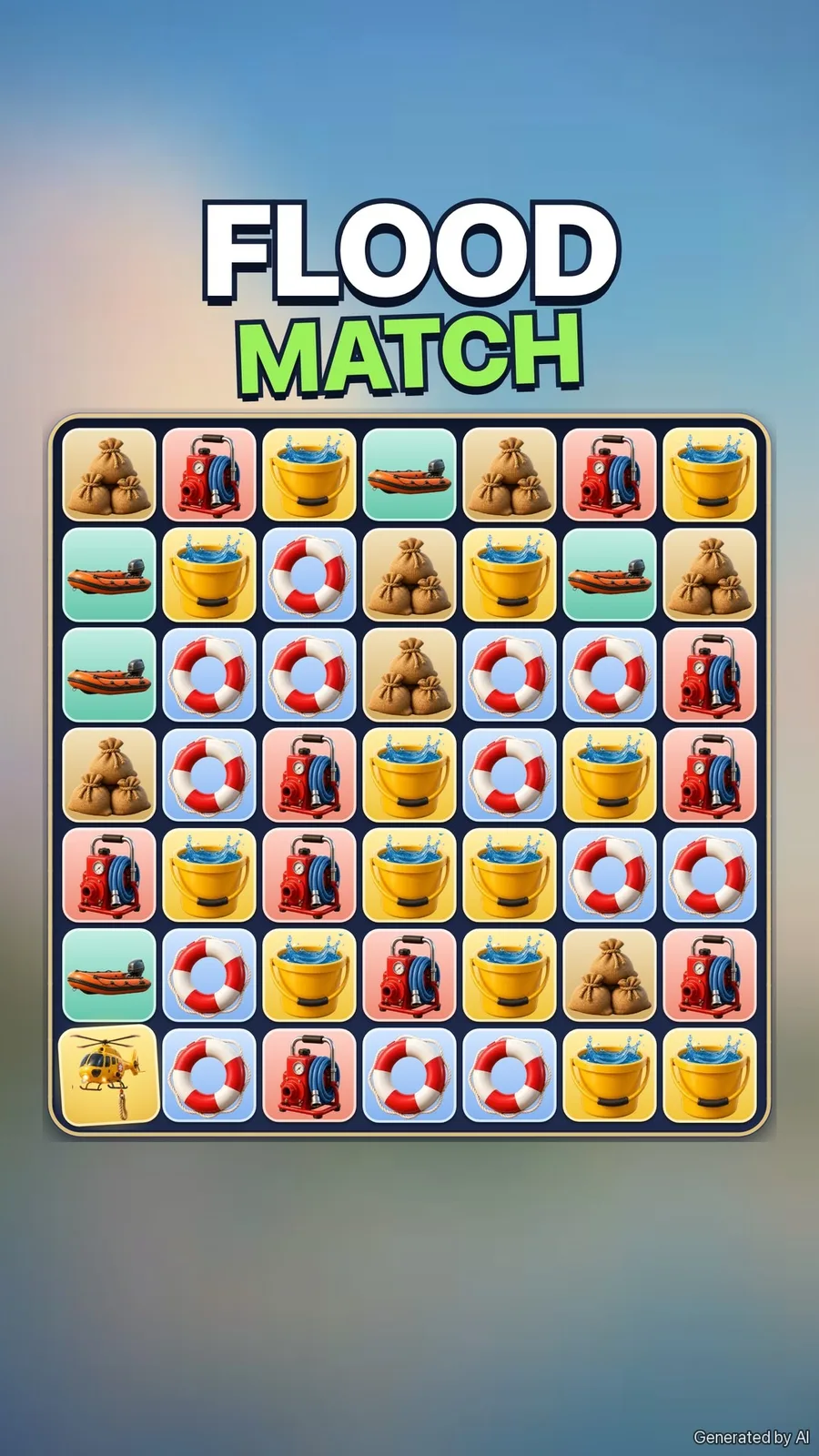
It plays well. But nothing happens because of your matches. There's no one to save and nothing to lose. That's a perfectly good first version, and the best place to start.
Tip: Play your first version for a minute before you change anything. Playing shows you what's missing much faster than thinking about it.
Step 2: One edit, give your matches something to save
Open your game's page, go to Make Edits, and say what you want in plain words:
"Add a flooded rooftop on top: sandbags raise the wall, pumps lower the water, rings rescue people."
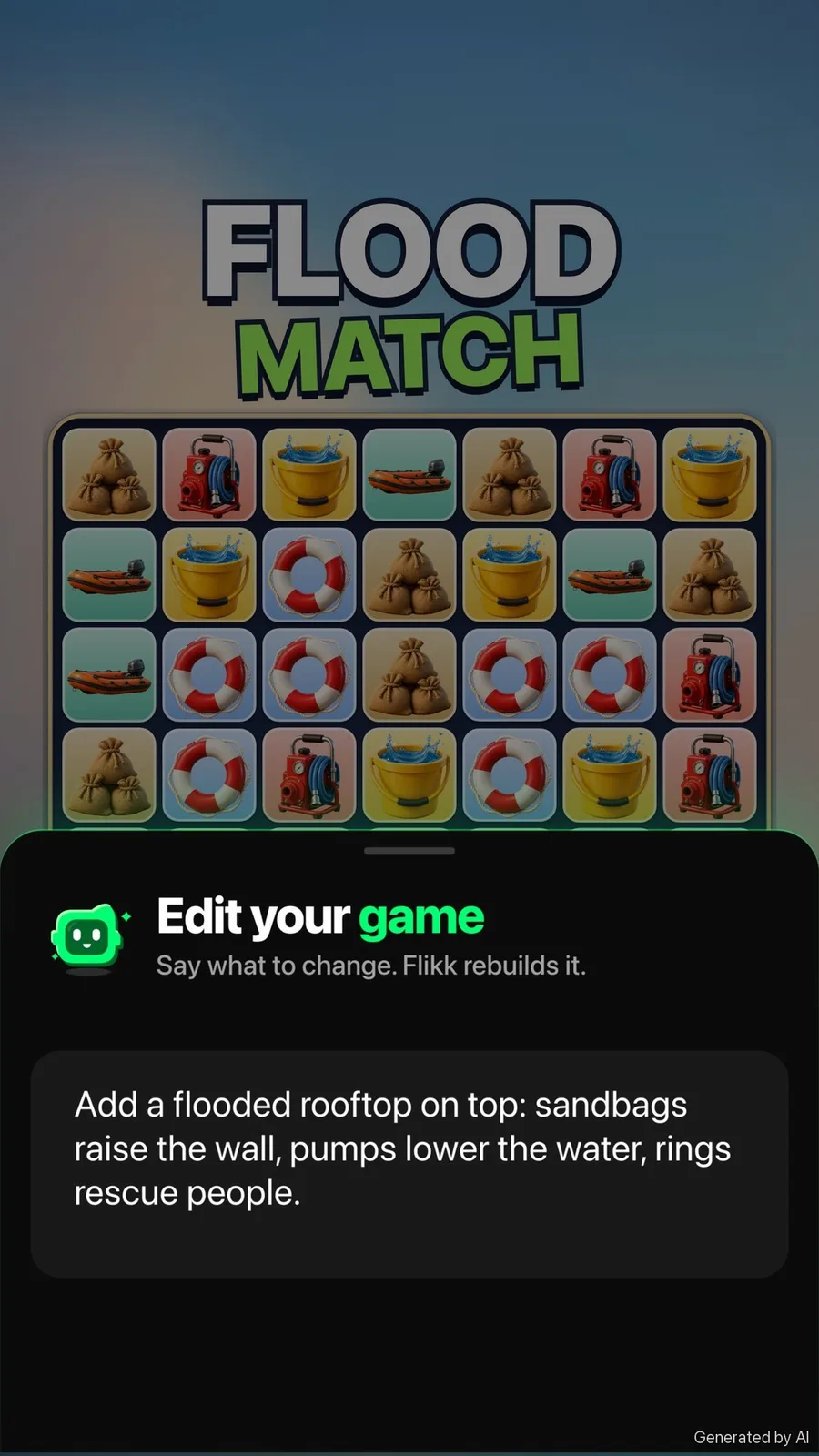
Flikk shows you a plan of the change and its cost (25 Tokens per edit). Tap Build it, and about 5 minutes later your game has the change. The version people are playing stays the same until the new one is ready.
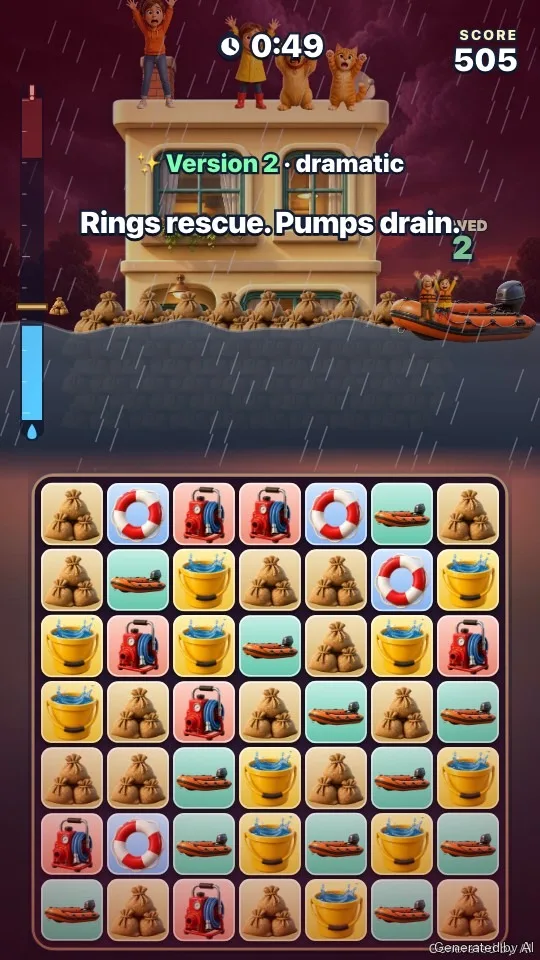
Version 2: every match means something
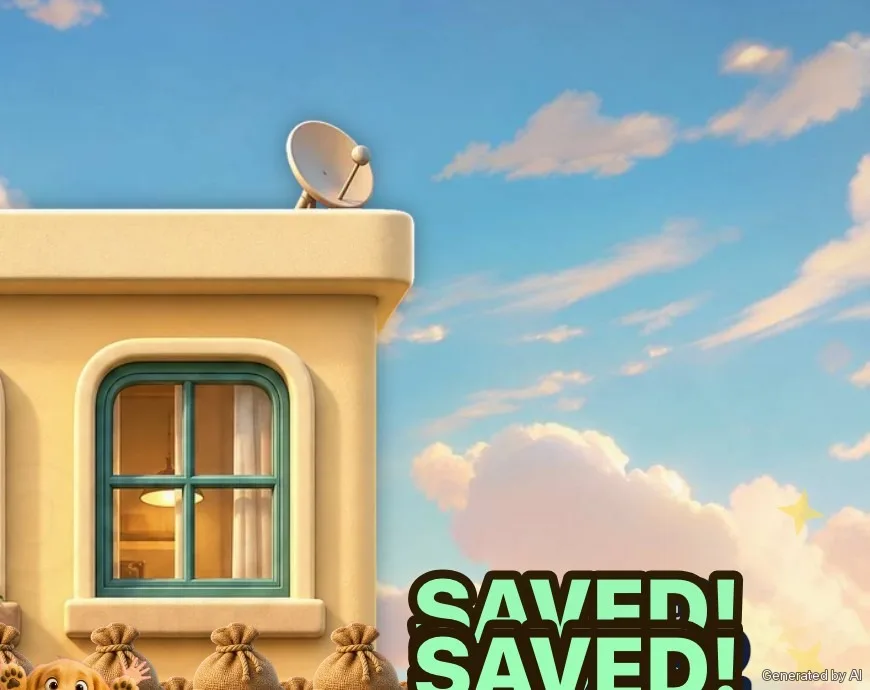
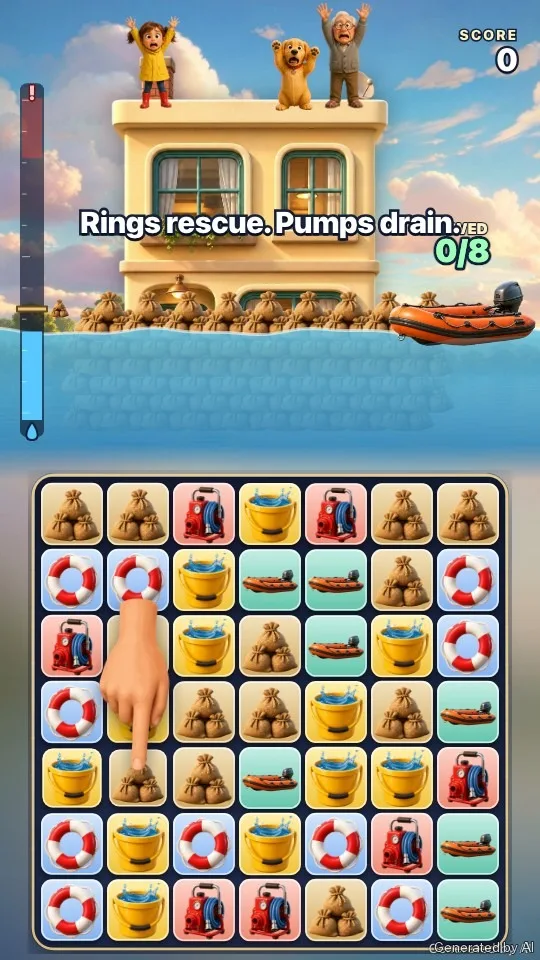
Here's what that one edit could turn the game into. Above the board, water rises around a house with people and pets stranded on the roof. The tiles you clear fly up to where they're needed:
- Sandbags raise the wall around the house. While the wall is higher than the water, the water rises slowly.
- Pumps and buckets lower the water.
- Life rings and boats rescue people one by one: a ring flies to the next person, and they swim to the rescue boat.
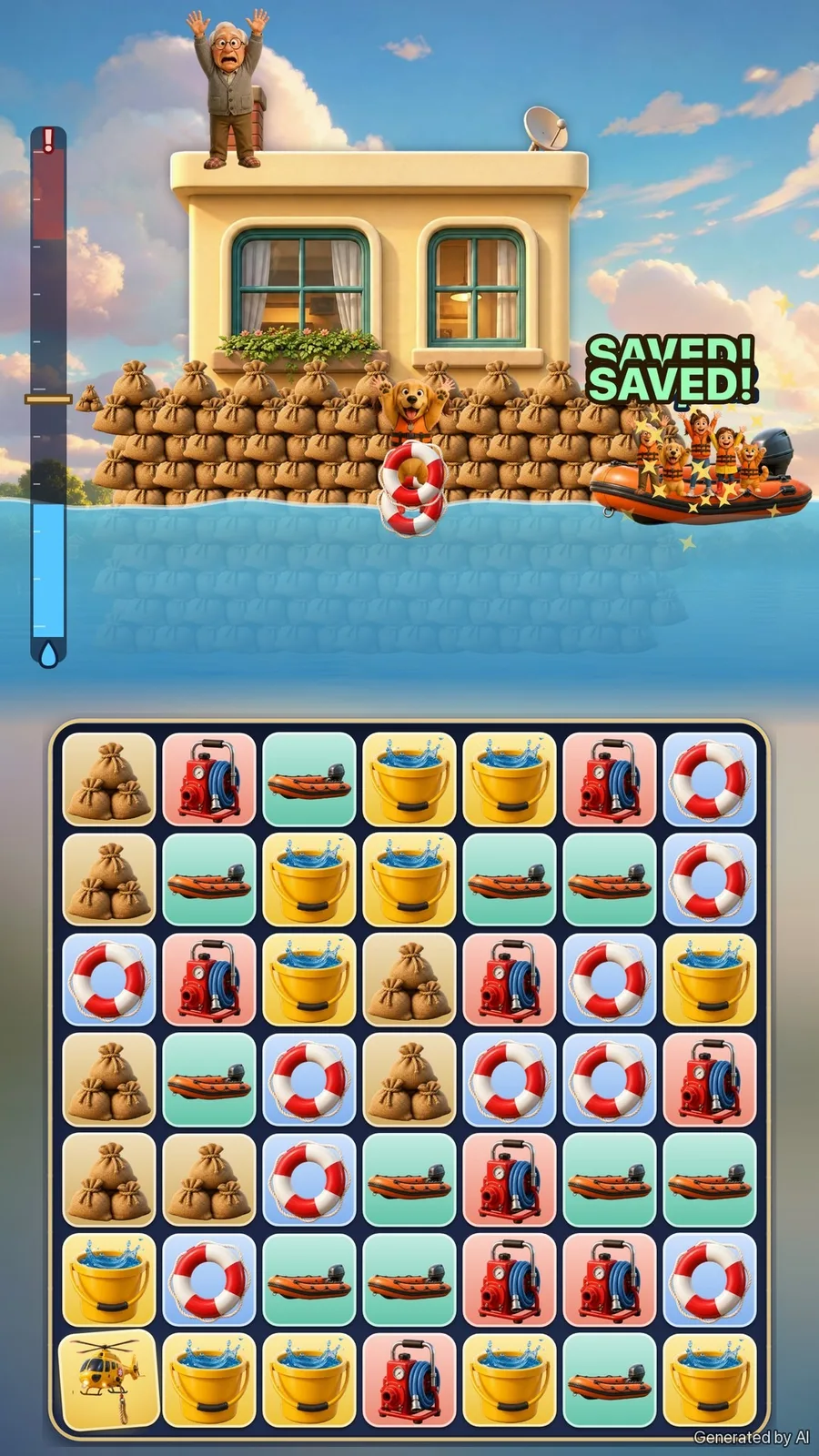
Now you have choices to make. Match only rings, and the water climbs over the wall. Match only sandbags, and nobody gets saved. The fun is in the balance.
Put the danger in a picture
The most important part of this version is a water-level meter on the side of the screen. It fills as the water rises, a marker shows how high your wall is, and the top turns red at the roof line. One look tells you how close you are to losing. No text needed.
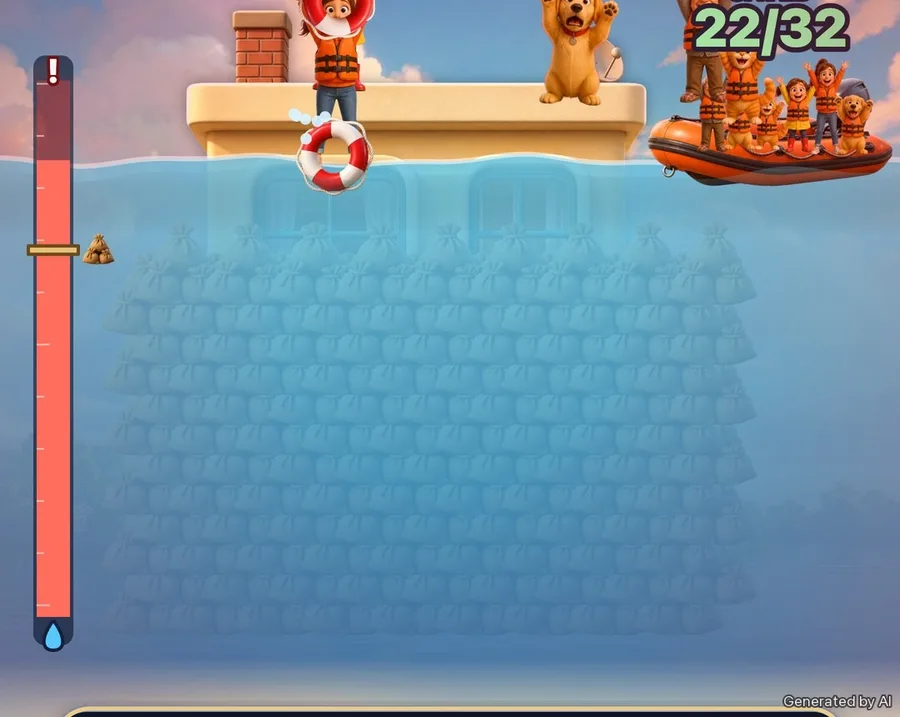
The game also needs a clear ending. If the water reaches the roof, you lose. If everyone is out, you win. That's what makes it a game, not just a board with a picture on top. (More on this in our Game Design Glossary, under win and lose conditions.)
Step 3: Make it harder
Once the game has something at stake, you can turn up the pressure. Say a version starts slow and friendly, with only a few people on the roof. One edit:
"Make it harder: the water rises faster, it rains, and more people are stranded."
Same rules, more pressure. On the left, a gentle version with 8 people to save. On the right, the harder one with 26.
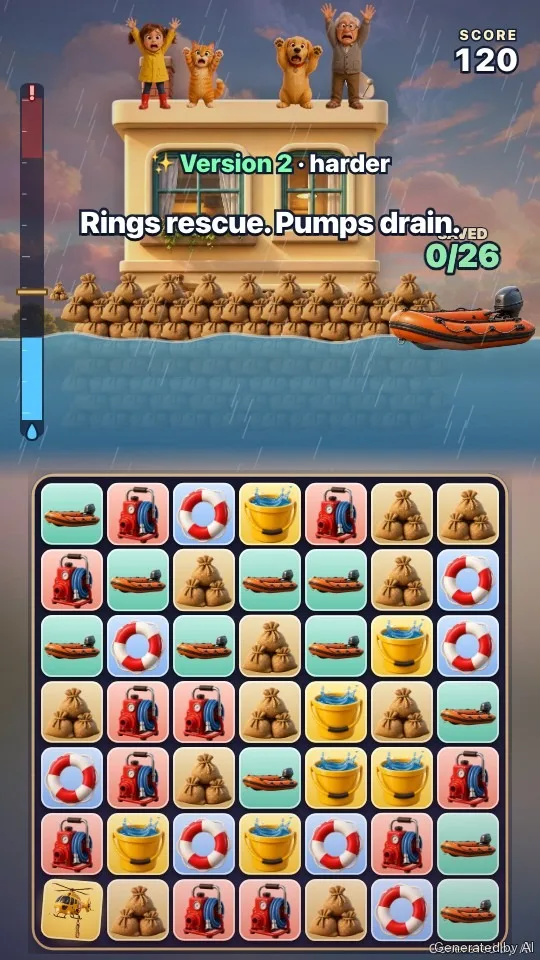
Harder doesn't have to mean unfair. Faster water and more people are easy to understand, so the player knows why they lost and wants to try again. If you're not sure how much harder is right, read about the difficulty curve first.
Step 4: Make it more dramatic
Excitement isn't only about difficulty. The mood matters too. The same game can look sunny and calm, or like a storm is coming. One edit:
"Make it more dramatic: a storm, lightning and dark red light."
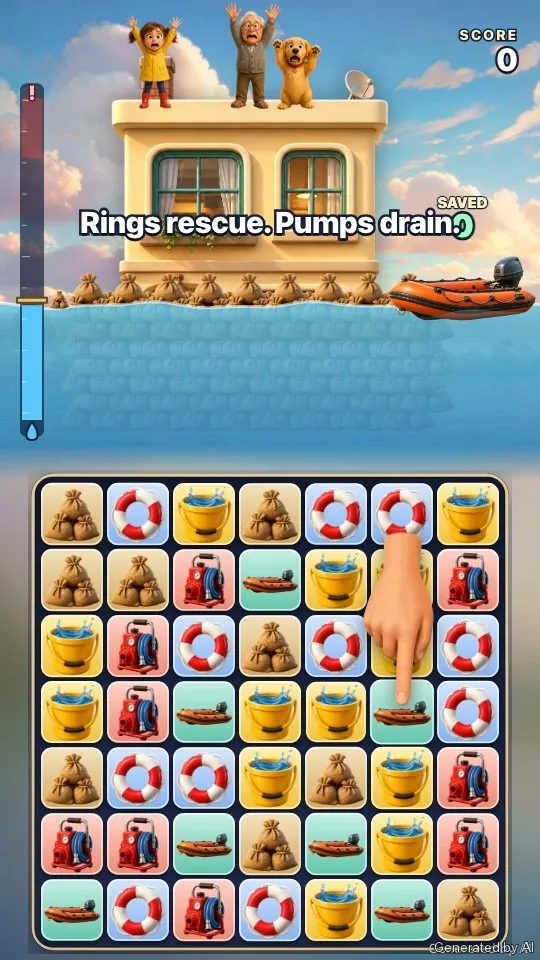
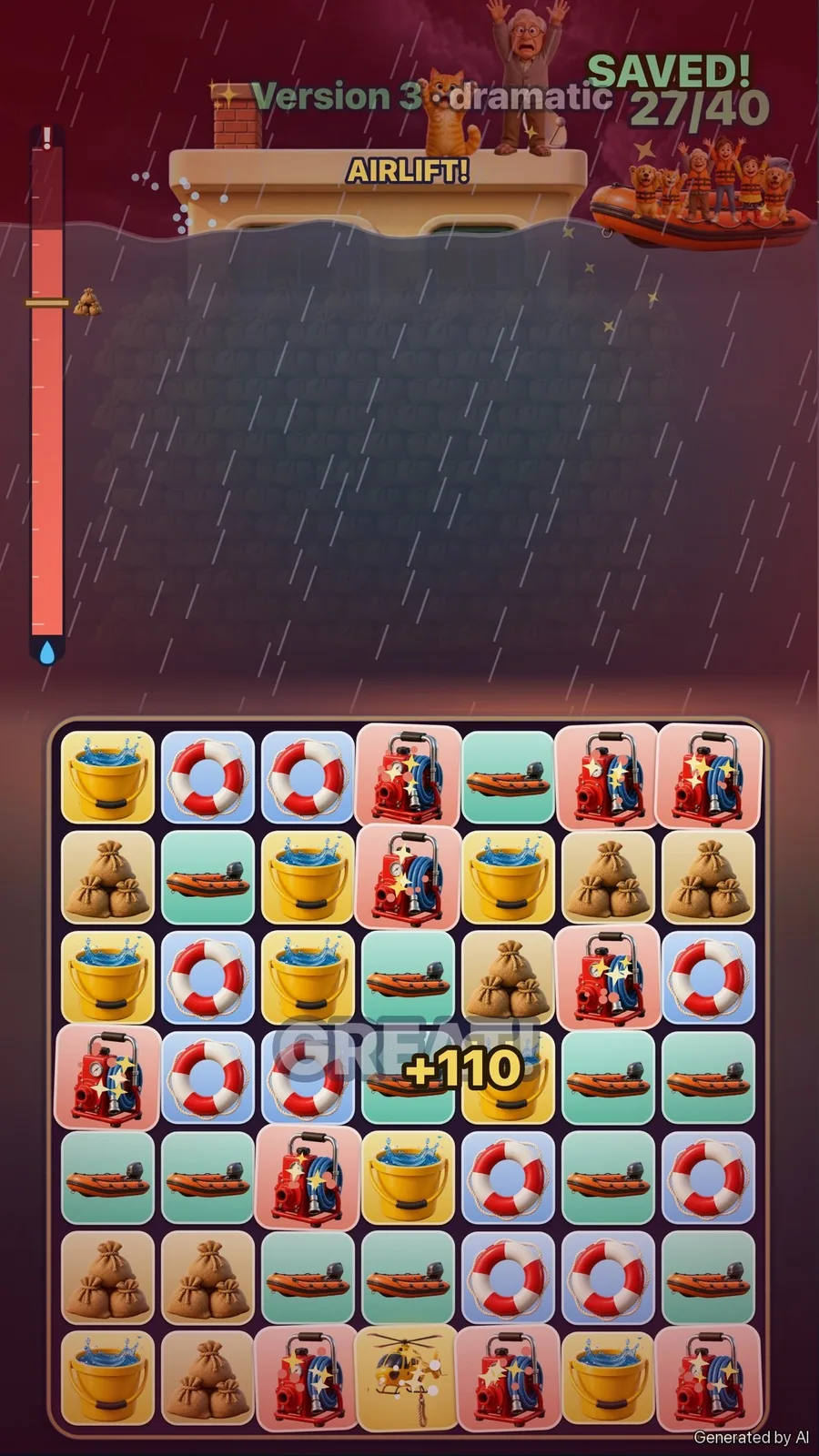
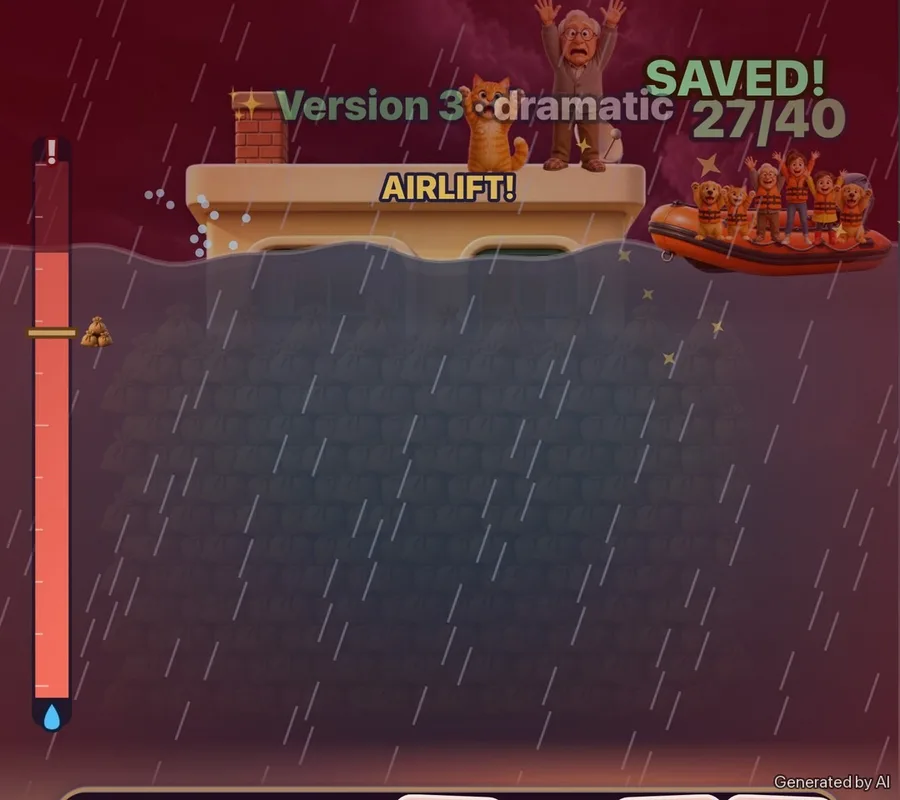
The rules stay the same. Only the mood changes: dark red light, rain and lightning. On the left, a calm start. On the right, after the edit.
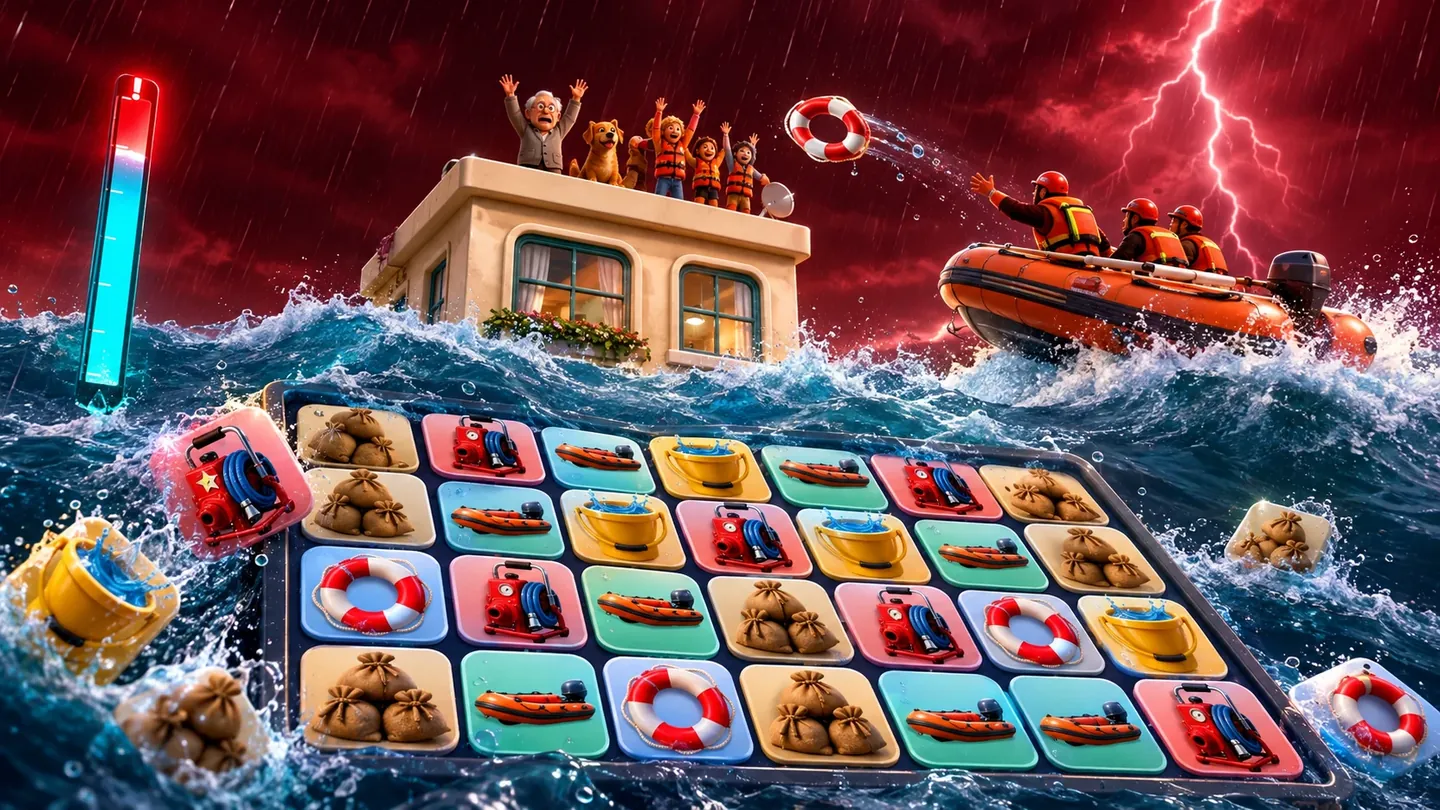
In the full storm, the meter glows red and a helicopter airlifts people off the roof while the rain comes down:
Why the flood works
The flood rescue is exciting for three reasons, and you can use all three in your own game:
- Something is at stake. People on the roof turn every match into a decision.
- The danger keeps growing. Water that rises on its own means you can't just wait for the perfect move.
- You can see it. The meter and the water line show the danger without a single word.
That works far beyond floods. A castle under attack, a spaceship running out of air, a cake about to burn: give the player something to protect, and something that keeps getting worse.
Five tips to make your game more exciting
- Add one thing per edit. The rooftop, the harder water and the storm were each one sentence. Small edits are easier to check.
- Give every tile a job. When different matches pull in different directions, the player has to think.
- Show the danger. A meter, a timer or rising water says "hurry" better than any text.
- Keep big combos in check. If one lucky move clears half the board, the danger disappears. Ask for each match to count as one clear step, like one rescue.
- Play after every edit. Notice what feels too easy, too hard or too calm, and make that your next edit.
Want more match-3 makeovers? Read how we turned a board into a farm full of hungry animals and into a hero fighting in a storm, or how to grow a game one edit at a time.
Try it yourself
Open Flikk, tap Create, and describe a simple match-3 game in one sentence. Play it, then ask yourself: what could the player lose? Add that with Make Edits, then make it harder or more dramatic. Each edit takes about 5 minutes.
Flikk is free on iOS and Android, and making games is free to start.
Download Flikk on iOS · Download Flikk on Android
FAQ
How do I make my game more exciting?
Give the player something to lose, and let the danger grow on its own. In a match-3, that can be water rising around a house: every match helps or saves someone, and waiting too long means losing. Show the danger with a meter or a timer, so the player feels it at a glance.
How do I make my game harder on Flikk?
Open your game's page, go to Make Edits and describe the change, for example "the water rises faster and more people are stranded". Flikk shows you a plan and the cost, and the change takes about 5 minutes.
Can I change the mood of my game without changing the rules?
Yes. Describe the mood you want in Make Edits, like "a storm, lightning and dark red light". The rules can stay the same while the look changes.
How much does it cost?
Flikk is free on iOS and Android, and making games is free to start. A new game costs 100 Tokens and each edit costs 25 Tokens. Flikk is available in the US.