Level Design: How Good Games Teach You Without Words
Good levels teach the rules while you play: one new idea at a time, a quick tip, a breather. Here's how real Flikk games do it, and how to do it in yours.
In this article
Nobody reads the rules of a mobile game. You open it, you tap, and somehow you know what to do. That's not luck. It's level design: the levels themselves teach you the game, one small step at a time.
Here's how that works in real Flikk games, and how to ask Flikk for better levels in your own game.
What is level design?
Level design is deciding what's in each level, and in what order. How many pieces, which obstacles, when something new shows up, when the player gets a break.
It's the partner of the difficulty curve. The curve says how hard the game should get over time. Level design is how you actually build that, level by level.
Good level design follows three rules:
- Start tiny. The first level should be almost impossible to fail.
- Add one new thing at a time. One new piece, one new rule, then let the player practice it.
- Mix it up. Not every level should be harder than the last. Breathers keep players going.
Rule 1: start tiny
The first levels aren't there to challenge anyone. They show the player what to do.
In Can Pack Sort by @butchbeata, you pack colored cans into matching boxes on a conveyor belt. Level 2 has just 5 cans and two boxes. By level 6, there are 12 cans in two colors, and the boxes keep moving.
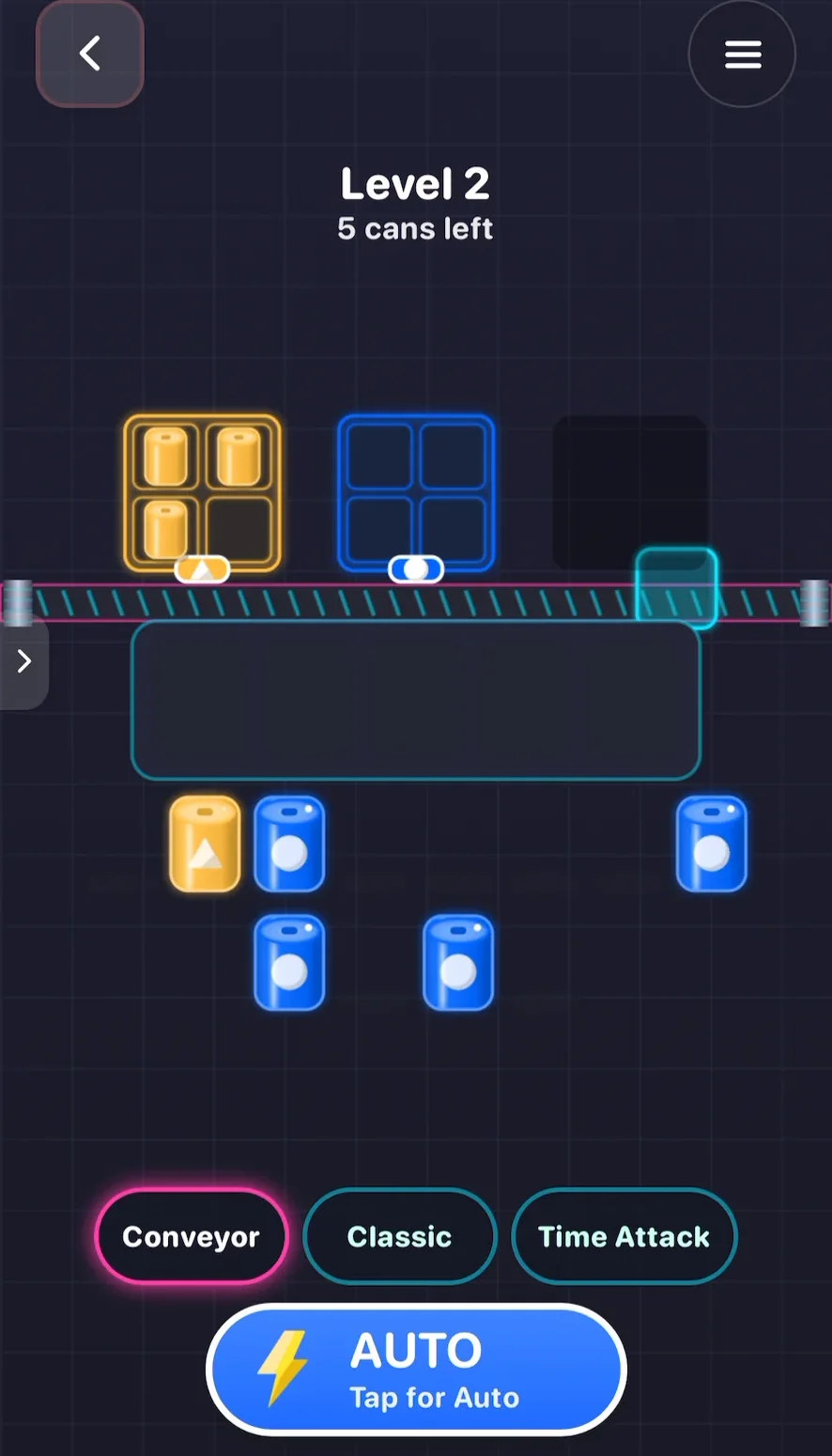
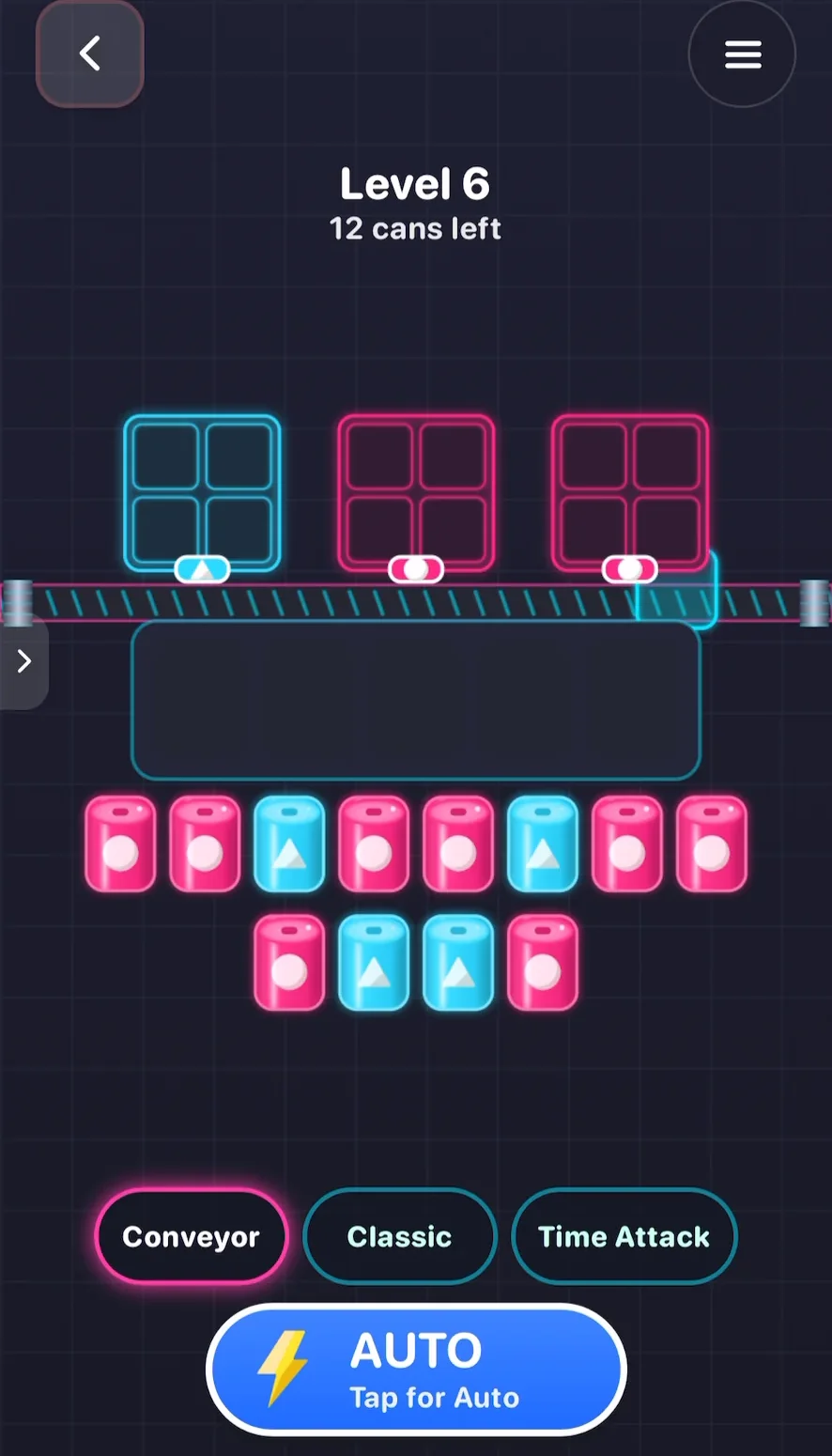
Same rules, same screen, more to do. By the time it gets busy, you already know exactly how packing works.
Rule 2: one new thing at a time, with a tip
Once the basics sit, the game adds something new. Not three new things. One.
Rush Hour Jam, made by the Flikk team, is about sending buses out of a packed parking lot to pick up the passengers waiting in line. Until level 9, every bus drives straight out. Then level 9 brings diagonal buses, and the game shows one short line at the bottom of the screen:
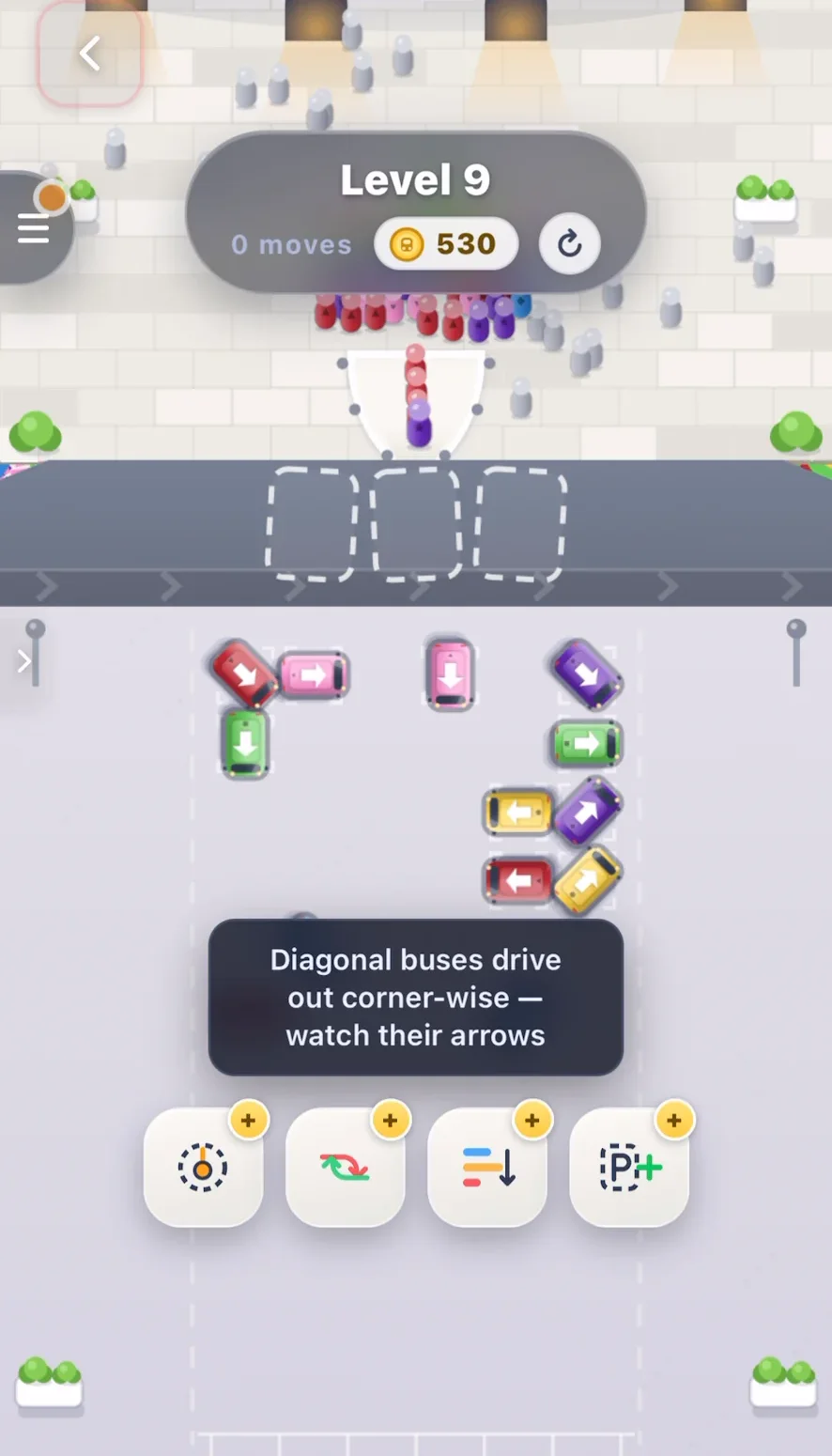
"Diagonal buses drive out corner-wise — watch their arrows"
That's the whole tutorial. One sentence, right when you need it, and then you figure out the rest by playing. No rulebook, no wall of text before the first level.
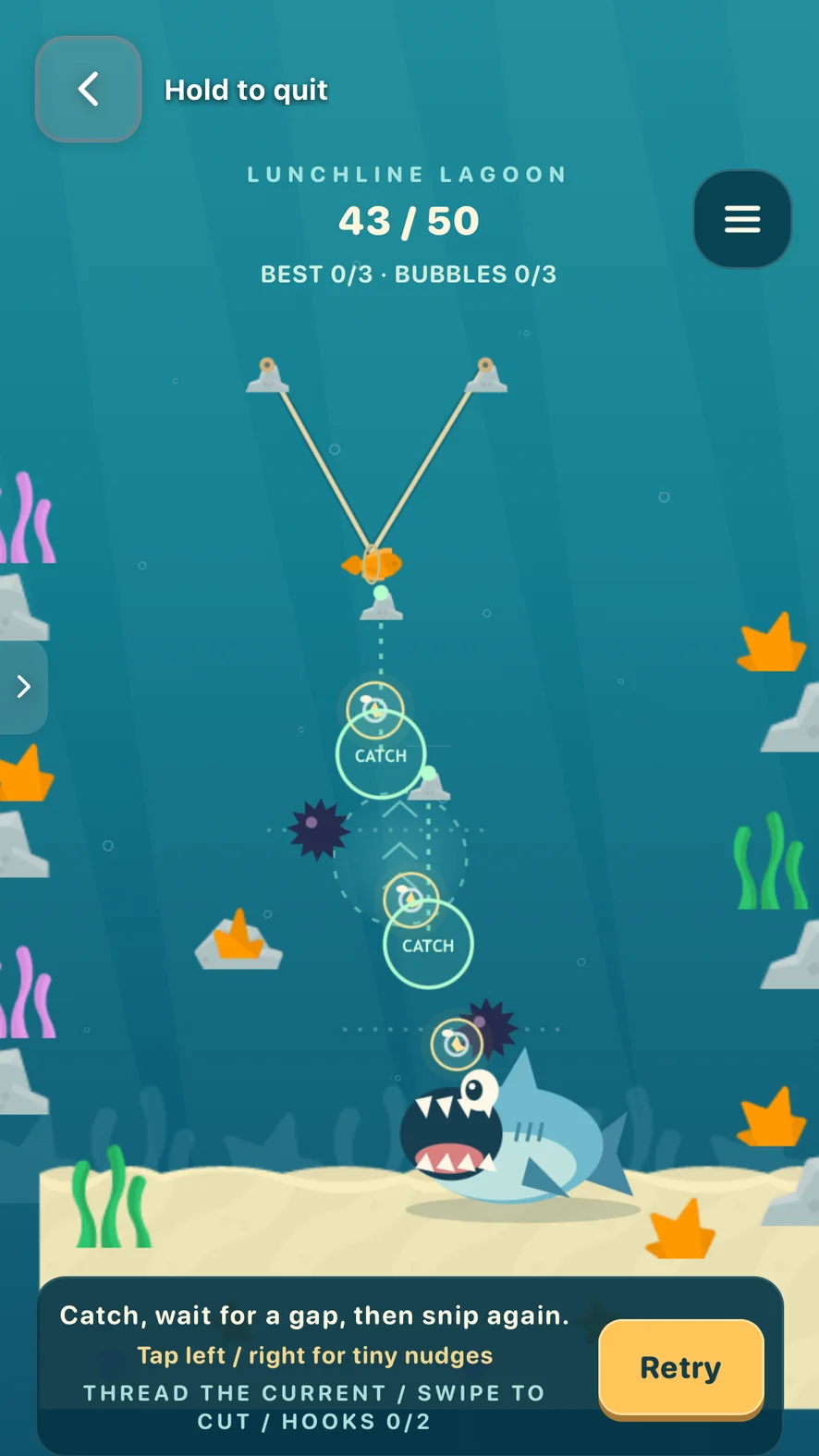
Lunchline Lagoon, a puzzle game we made on Flikk, does the same. It's a rope-cutting puzzle with a fish and a hungry shark, and level 43 shows a short tip at the bottom: "Catch, wait for a gap, then snip again." Below it, the level's goals in one line: thread the current, swipe to cut, hooks 0/2.
Rule 3: give players a breather
If every level is harder than the last, players get tired and quit. Good games mix in easier levels on purpose.
Arrow Outbreak, the most-played game on Flikk, does this well. You tap arrows to send them off the board, and each one only leaves if its path is clear. Level 5 has 16 arrows knotted together. Level 6 has only 9, and they're big and easy to read. Then level 7 goes up to 17.
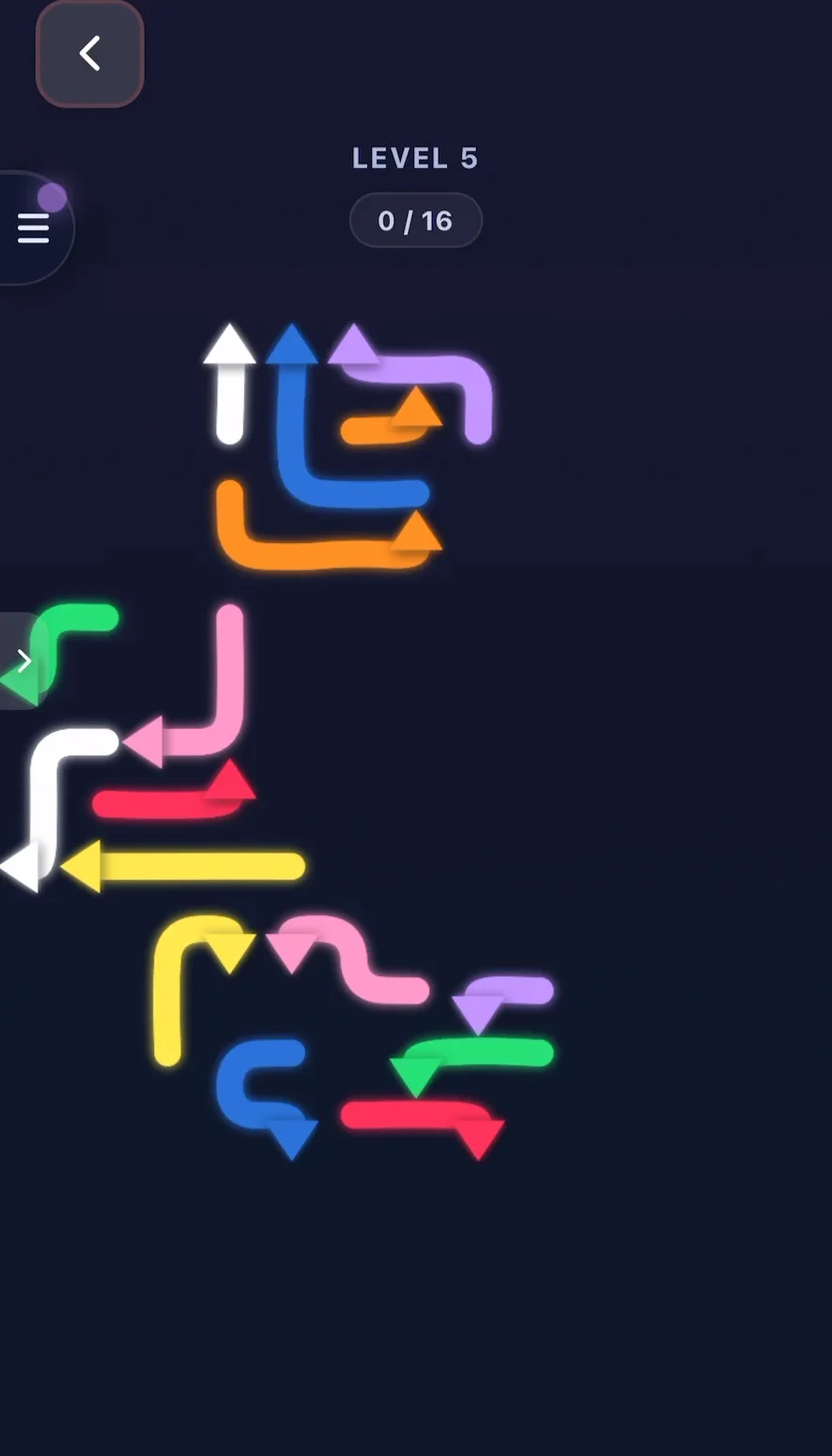
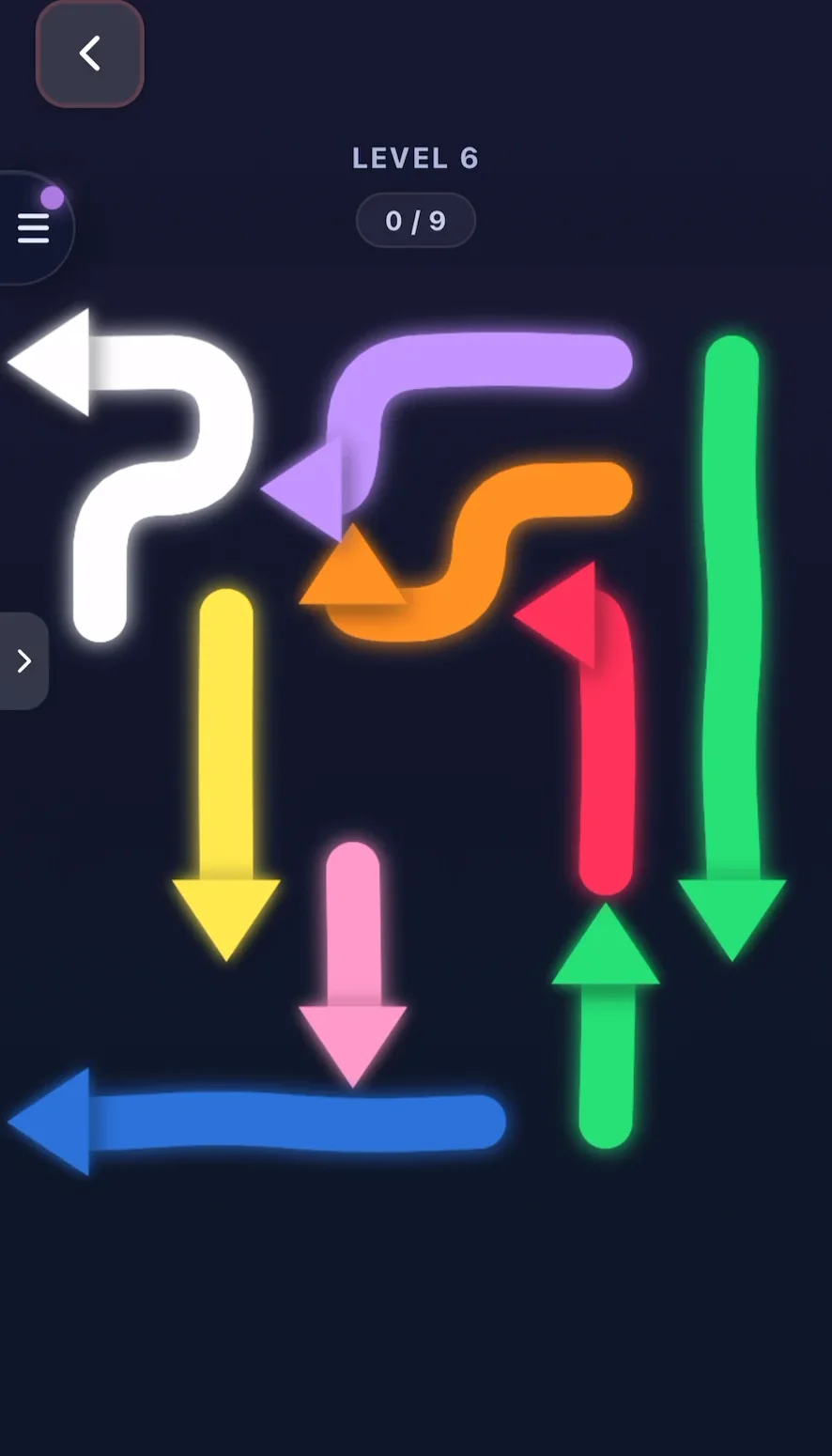
Level 6 feels great because it comes right after a hard one. You clear it fast, feel smart, and you're ready for the next push.

Tell the player what kind of level it is
Some games say it out loud. In Ink Arrows, also by the Flikk team, level 7 carries a small "WARM-UP" tag next to its name. You know right away: this one is easy, enjoy it.
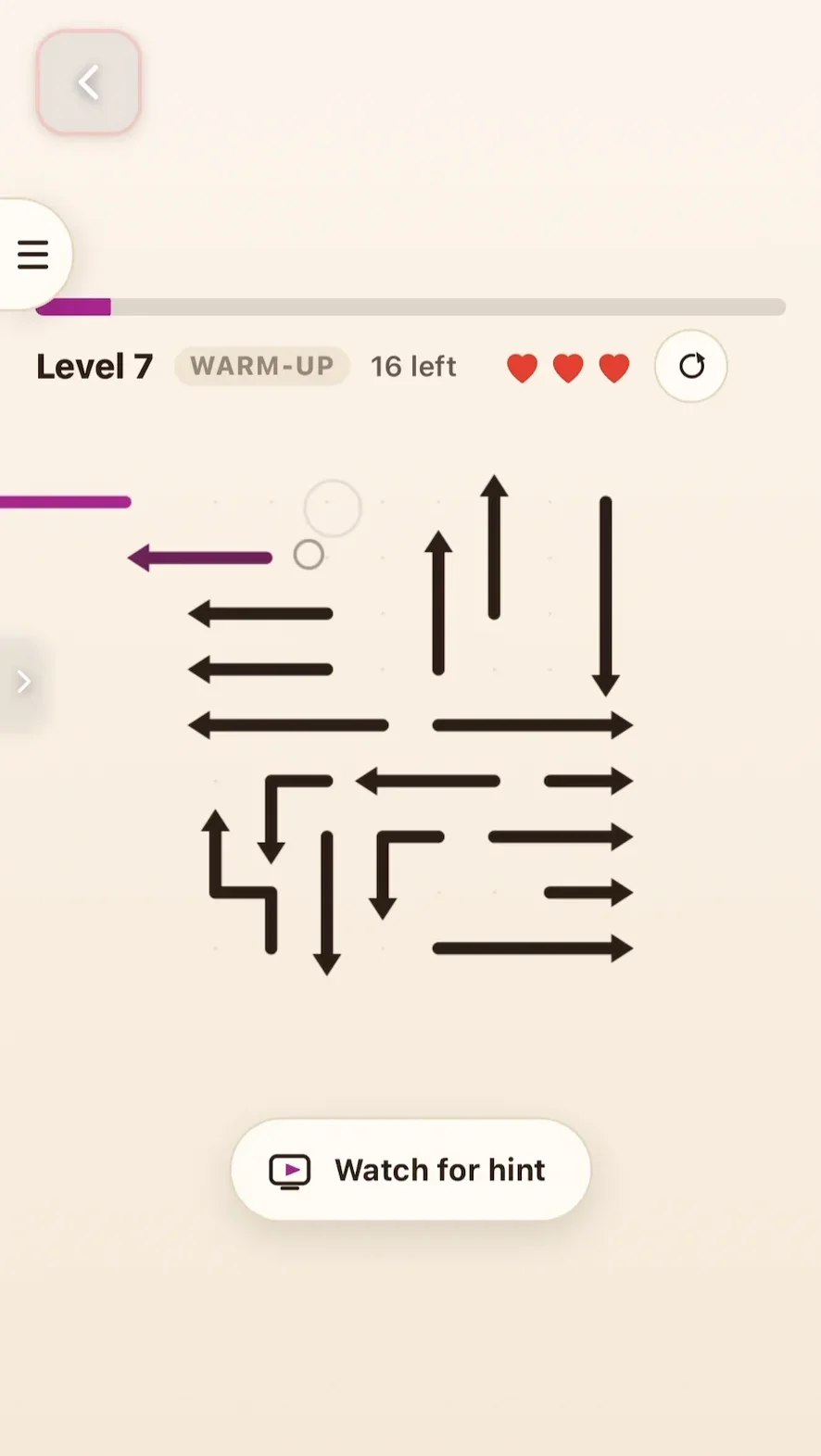
There's a safety net too: three hearts, and a Watch for hint button if you get stuck. Good levels are hard enough to make you think, but they never leave you stuck for good.
Give each level a clear goal
A level is easier to design and more fun to play when the goal is obvious. In Paint Maze 5000 by @pikachu, level 17 shows everything you need at a glance: Moves 3/9, three stars to earn, a progress bar that says 26% painted, and an undo button.
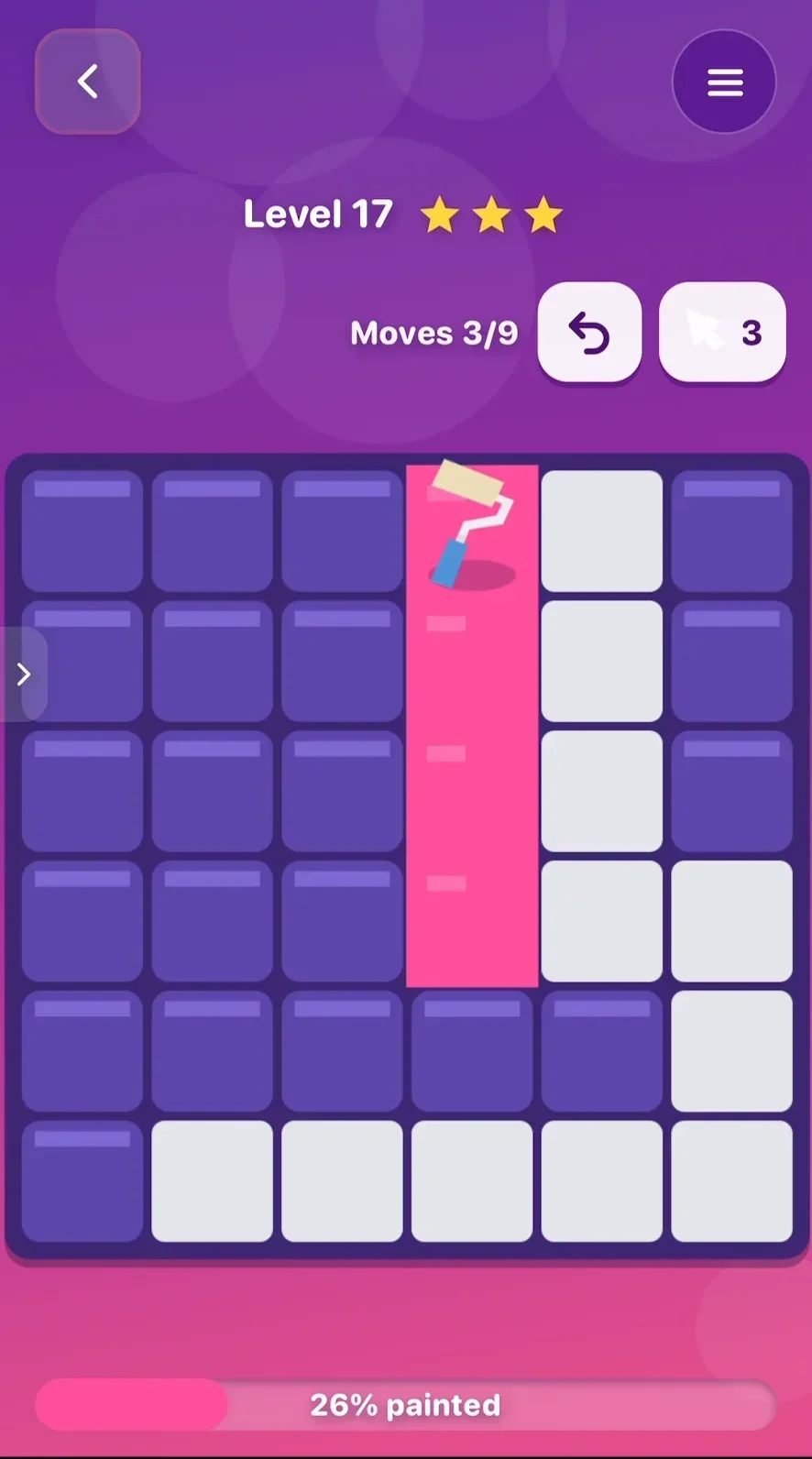
The move limit is the level design. The same maze is easy with 20 moves and a real puzzle with 9. Change one number, and you've made a new level.
How to improve the levels in your Flikk game
You don't need to place every piece yourself. Open your game, go to Make Edits, and describe how the levels should change. Each edit costs 25 Tokens and takes about 5 minutes. Some prompts to try, one per edit:
- Start easier: "Make the first three levels very easy, with only a few pieces, so new players learn how to play."
- One new thing at a time: "Introduce one new obstacle every five levels, and let the player practice it for a few levels before the next one."
- A tip for each new thing: "When a new obstacle appears for the first time, show a short one-line tip at the bottom of the screen."
- Breathers: "After every hard level, make the next level a bit easier."
- Clear goals: "Give each level a move limit and show the moves left at the top."
- A safety net: "Add a hint button that shows one good move when the player is stuck."
Then play your first ten levels like a new player. Wherever you'd quit, that level needs work.
The 10-level test
Hand your game to a friend, say nothing, and watch them play the first ten levels:
- Did they know what to do in level 1 without you explaining? If not, make it simpler.
- Did they notice each new thing when it came in? If not, add a short tip.
- Where did they slow down or sigh? Put a breather right after that level.
Want to go deeper? Read the rest of our game design series: progression, game feel and the difficulty curve.
FAQ
What is level design in games?
Level design is planning what's in each level of a game and in what order: how many pieces or enemies, which obstacles, when new ideas appear and when the player gets a break. Good level design teaches the game while you play.
How do games teach players without a tutorial?
They start with very easy levels, add one new idea at a time, and show a short tip the first time something new appears. Players learn by doing instead of reading.
What is a breather level?
A breather is an easier level placed right after a hard one. It gives players a quick win and a rest before the next challenge, so they keep playing instead of quitting.
How many levels should my game have?
Enough to introduce every idea and let players practice it. Many puzzle games start with a short set of easy levels and then keep adding new ones. Start with ten good levels and add more once those work.
Can I change the levels of my Flikk game without coding?
Yes. In Make Edits, describe the change, like "make the first three levels easier" or "add a new obstacle every five levels", and Flikk updates your game in about 5 minutes.