The Difficulty Curve: How to Make Your Game Hard in the Right Way
What a difficulty curve is, the 4 parts of a good one, and how six puzzle games on Flikk ramp up level by level. Plus how to tune your own game's curve.
In this article
A game that's too easy gets boring. A game that's too hard gets deleted. The difficulty curve is how a game moves between the two: how hard it is at the start, how fast it gets harder, and where it lets you breathe.
Our game design glossary explains the term in a paragraph. This post goes further: the four parts of a good curve, what they look like in six real puzzle games on Flikk, and how to tune the curve of your own game with one edit.
Quick note: Flikk is our app. Every screenshot below is from a game we played ourselves.
What is a difficulty curve?
Picture a line. Left to right is your progress through the game, level by level. Bottom to top is how hard it is. That line is your difficulty curve.
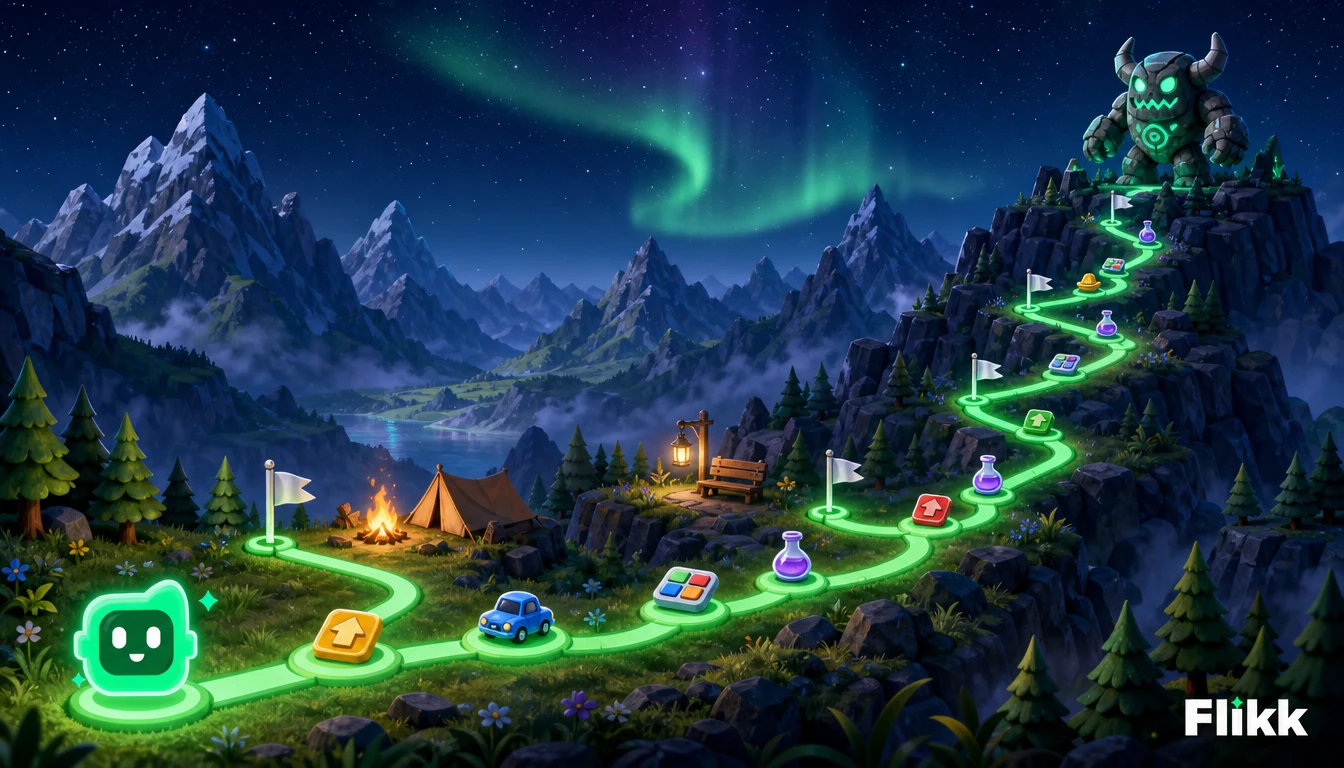
A good curve isn't a straight ramp. It has four parts:
- An easy start. The first levels teach the rules. You should win them almost without trying, and that's the point: you learn what to do and feel good doing it.
- A slow ramp. Each level asks a bit more: a bigger board, more pieces, one new rule. Never everything at once.
- Breathers. After a hard level, an easier one. It lets you enjoy what you just learned before the next step up.
- Peaks. Now and then a level that really tests you, like a boss fight or a board that takes three tries.
The goal is to keep players in the zone between bored and frustrated. Easy enough to keep going, hard enough to feel proud when they win.
What it looks like in real Flikk games
We went back to our screen recordings of six puzzle games on Flikk and compared an early level with a later one. Here's how each game climbs.
Paint Maze 5000: bigger boards, more moves, and a breather
You roll a paint roller across the board until every tile is painted, within a set number of moves. Level 6 is a small 5×5 board with 7 moves. Level 21 is a much bigger board with 13 moves to plan.
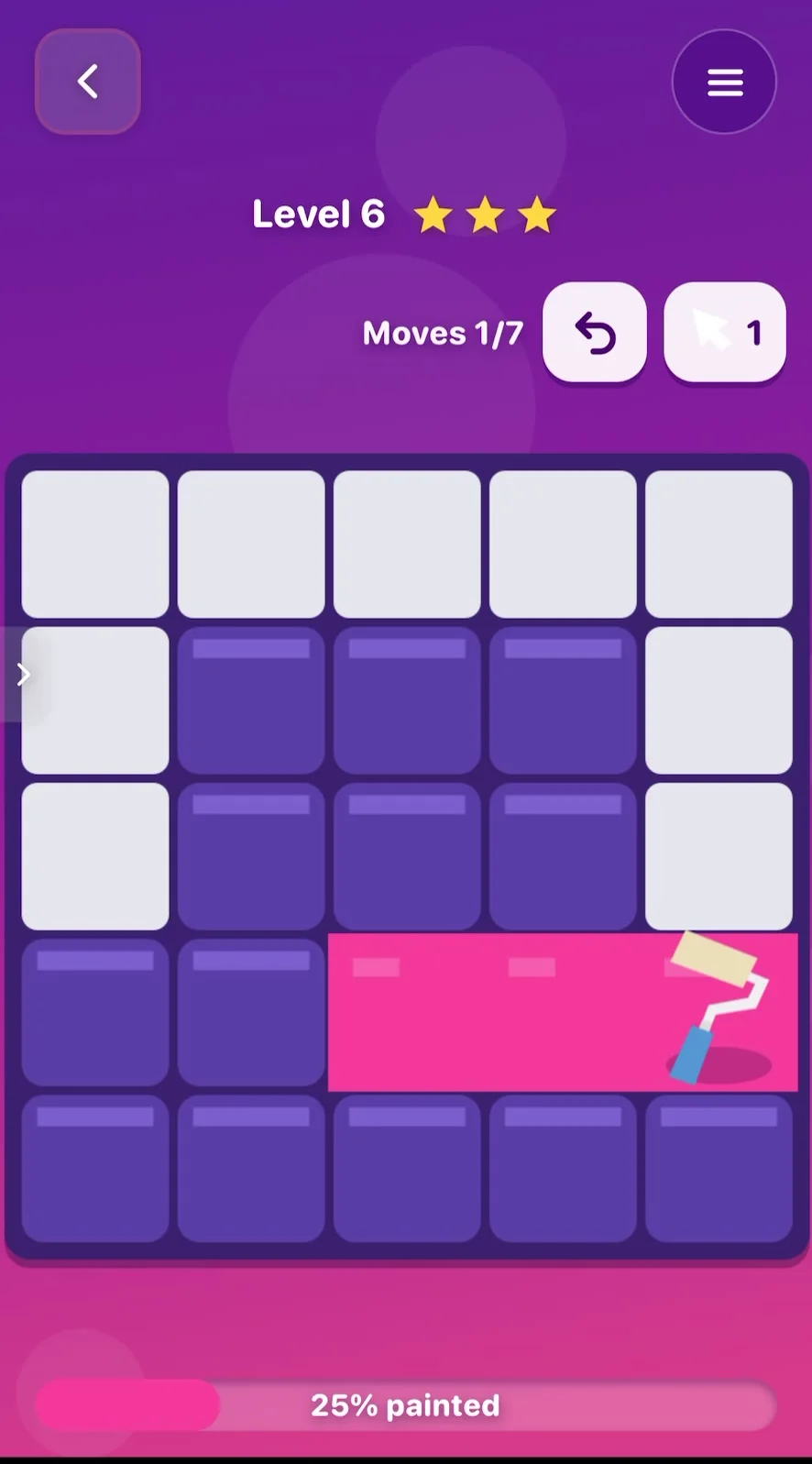
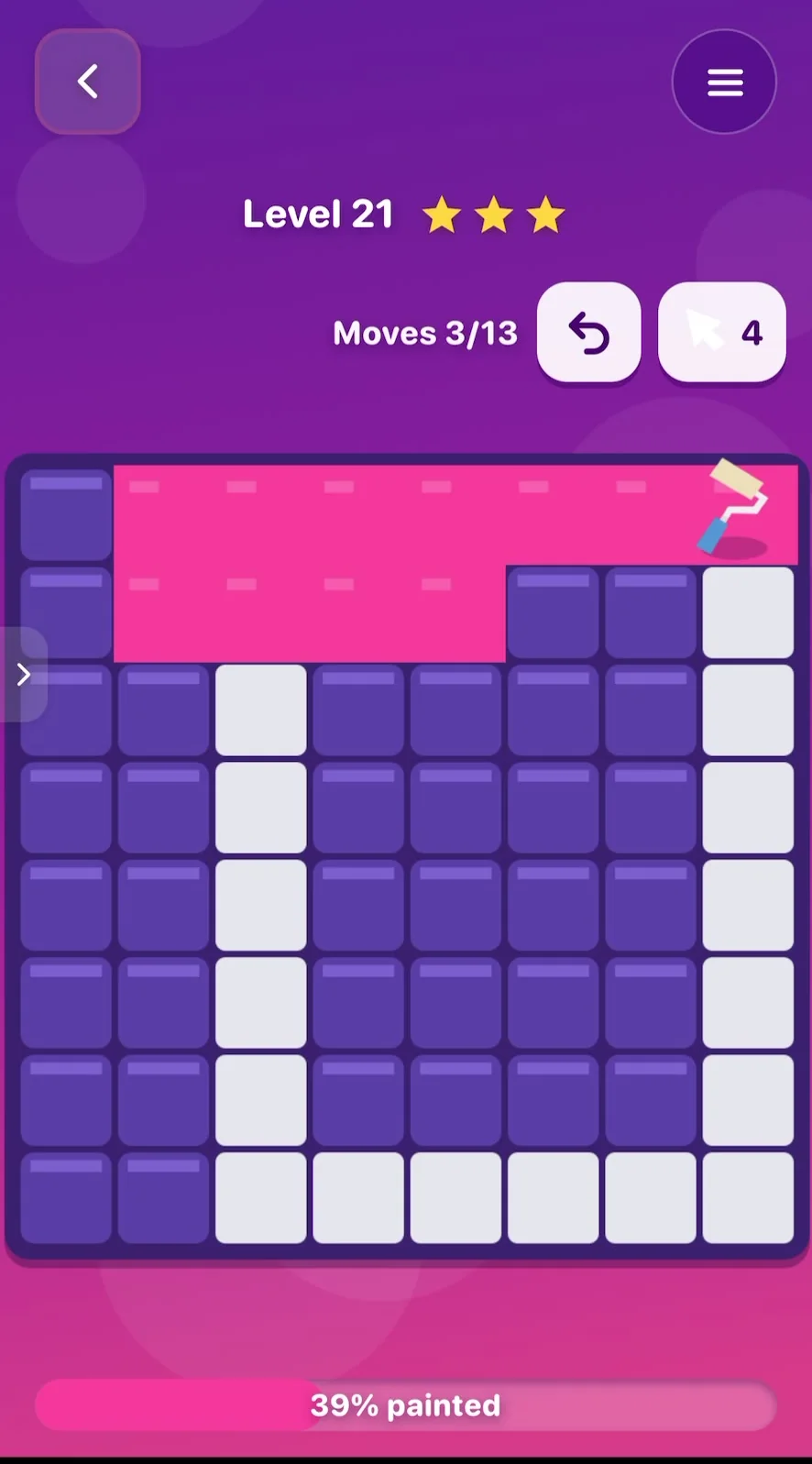
The climb isn't a straight line, though. Level 11 gives you 11 moves, and level 13 drops back to 7. That's a breather: a quicker win between two longer puzzles. With 5,000 levels in the game, that rhythm matters.
Elixir Sort: one new color at a time

You pour elixirs from tube to tube until every tube holds one color. Board 4 has three colors and a limit of 9 pours. Board 10 adds a fourth color, spreads six tubes over two rows and gives you 12 pours.
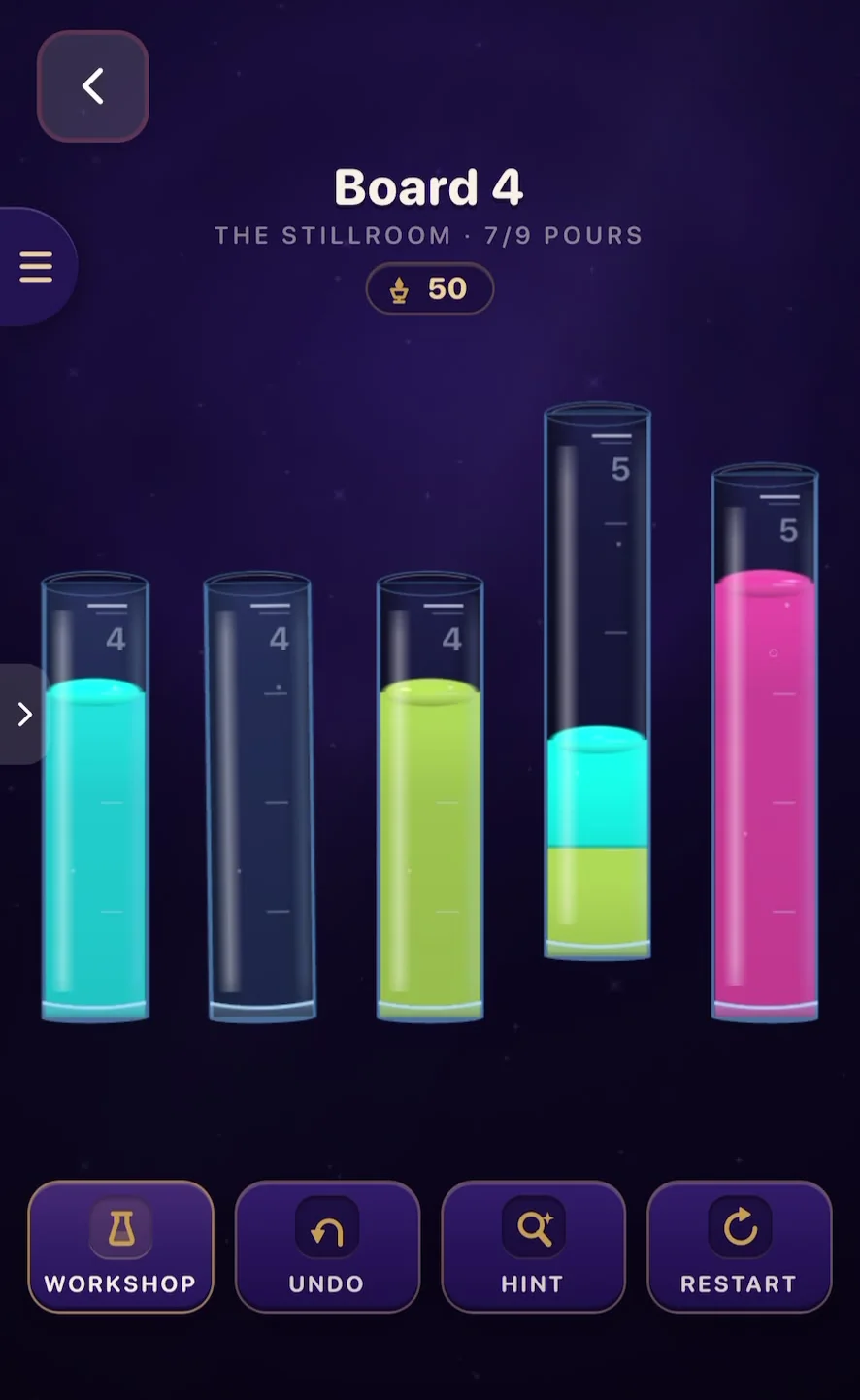
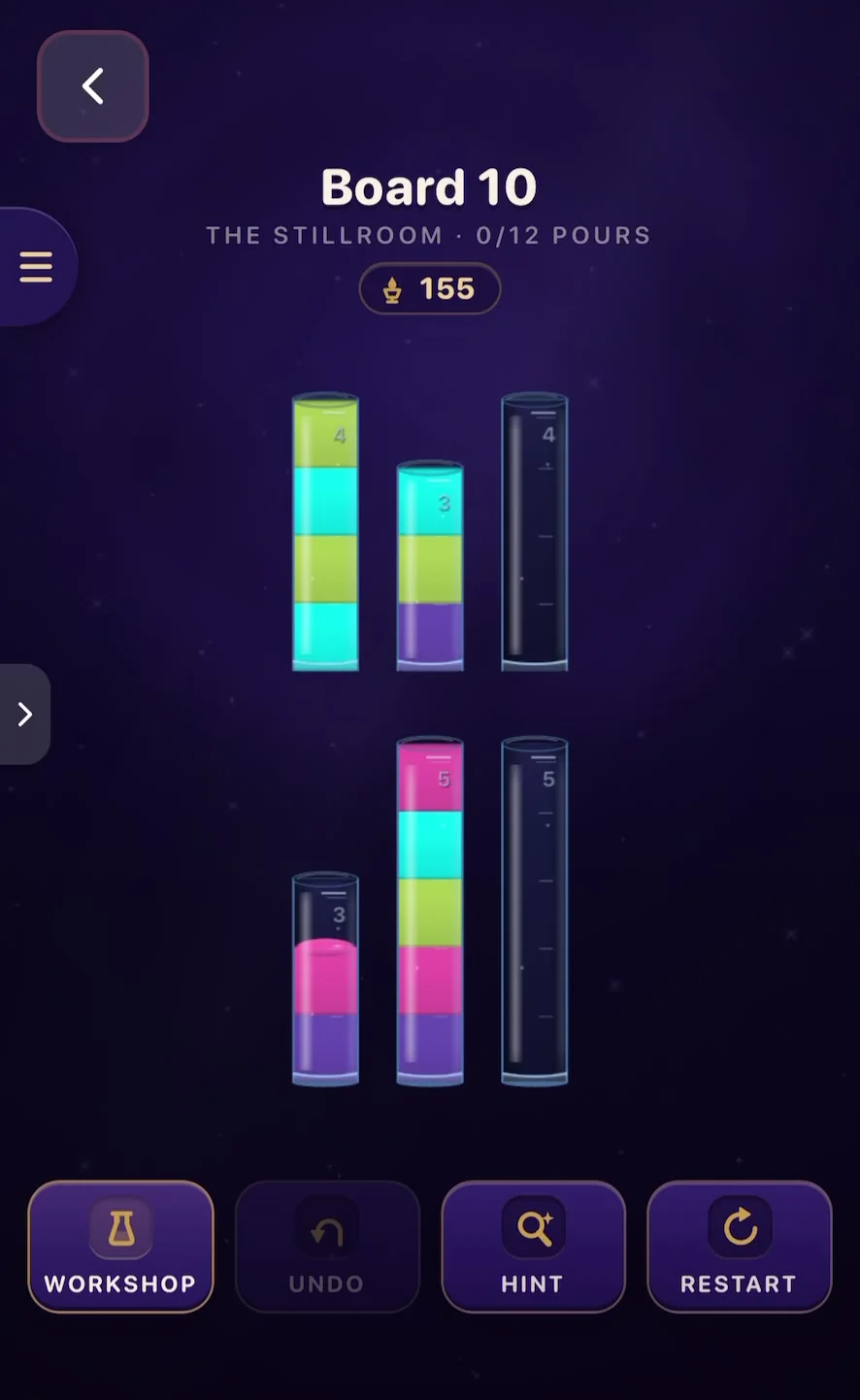
In between, board 5 allows 8 pours, one fewer than board 4. Small steps, and one new thing at a time: that's the slow ramp.
Arrow Outbreak: a breather before the next jump
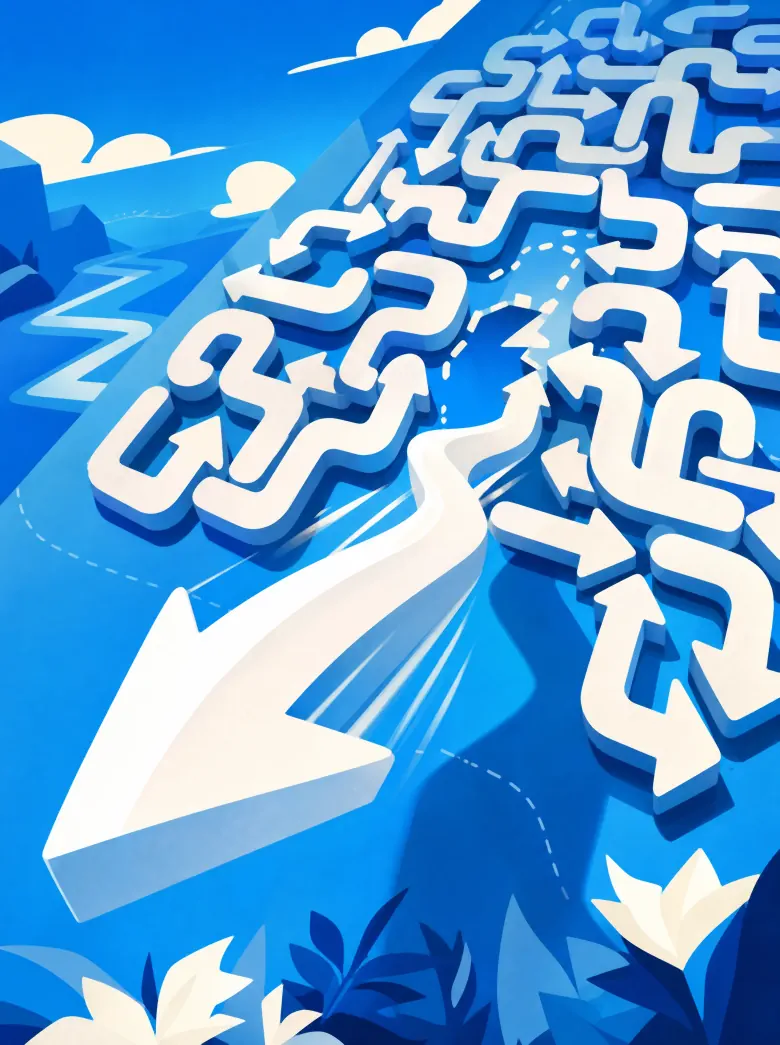
Tap the arrows in the right order so each one can fly off the screen. Level 5 has 15 arrows. Level 6 has only 9. Then level 7 jumps to 17.
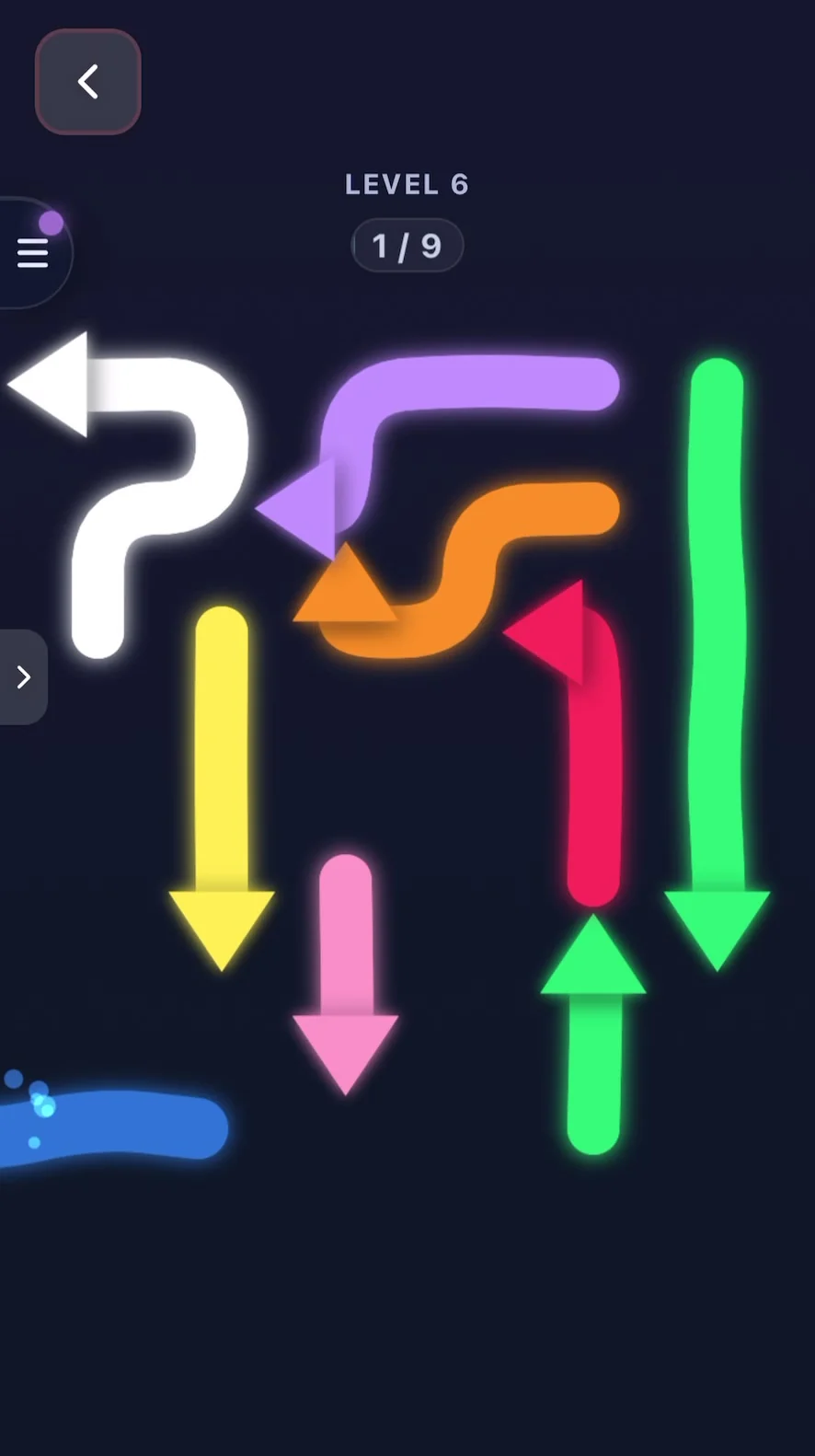
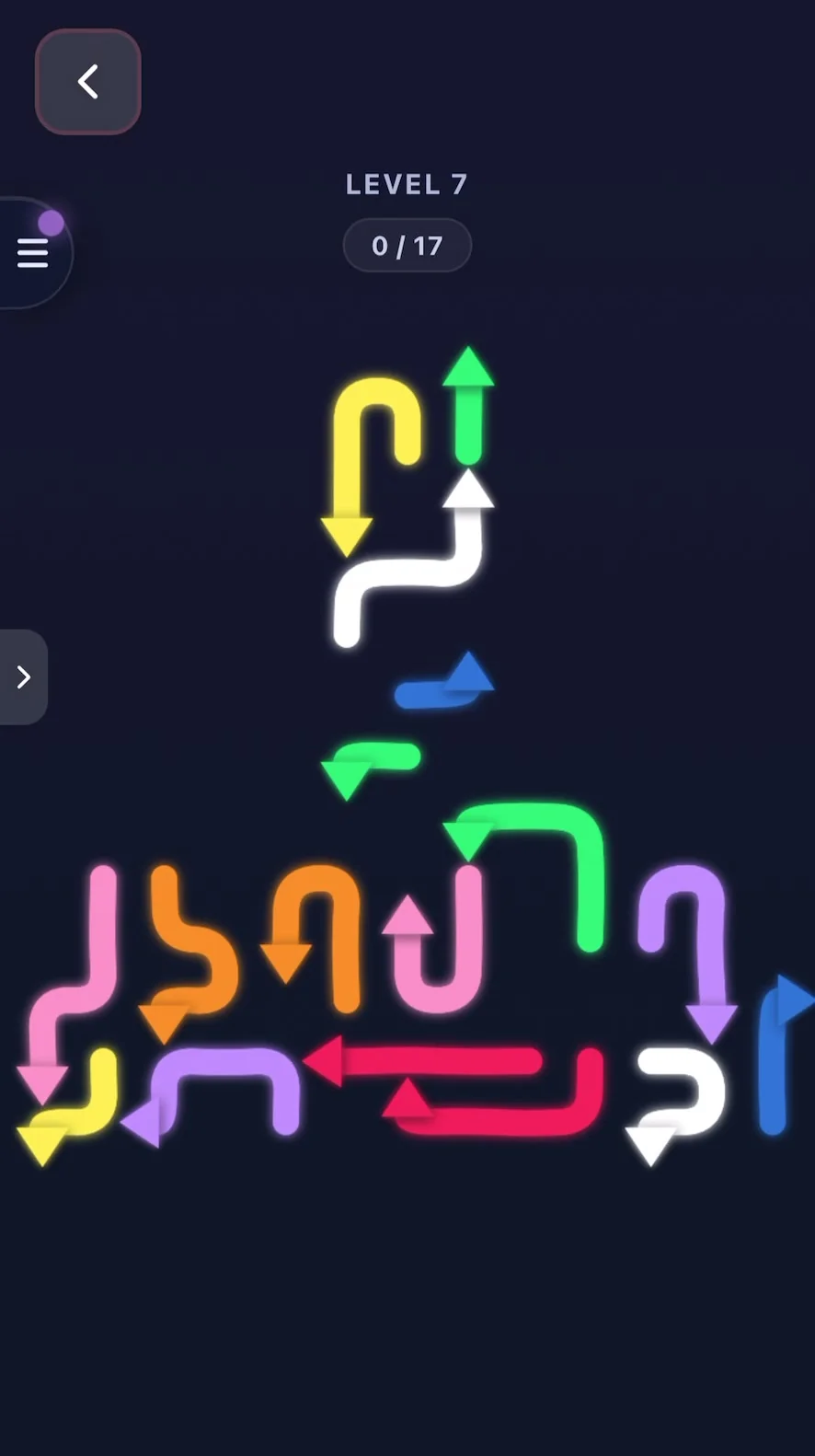
Level 6 is the breather. You clear it fast, feel smart, and then level 7 asks for everything you've learned.
Ink Arrows: the game tells you where you are
Same idea as Arrow Outbreak, but a blocked arrow costs one of your three lives. Ink Arrows even labels its levels: the early ones say Warm-up, and from level 8 they say Loose. Level 5 has 9 arrows. Level 9 has 15.
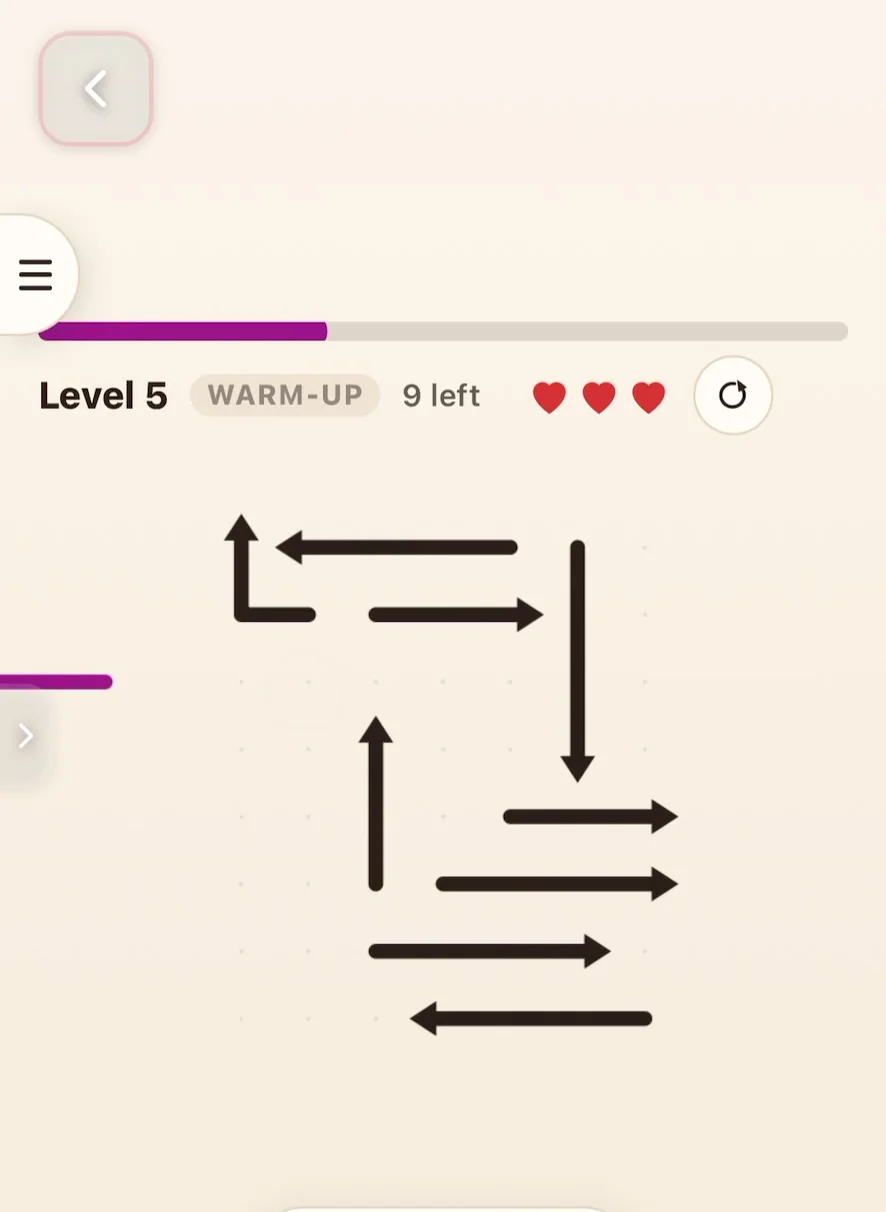
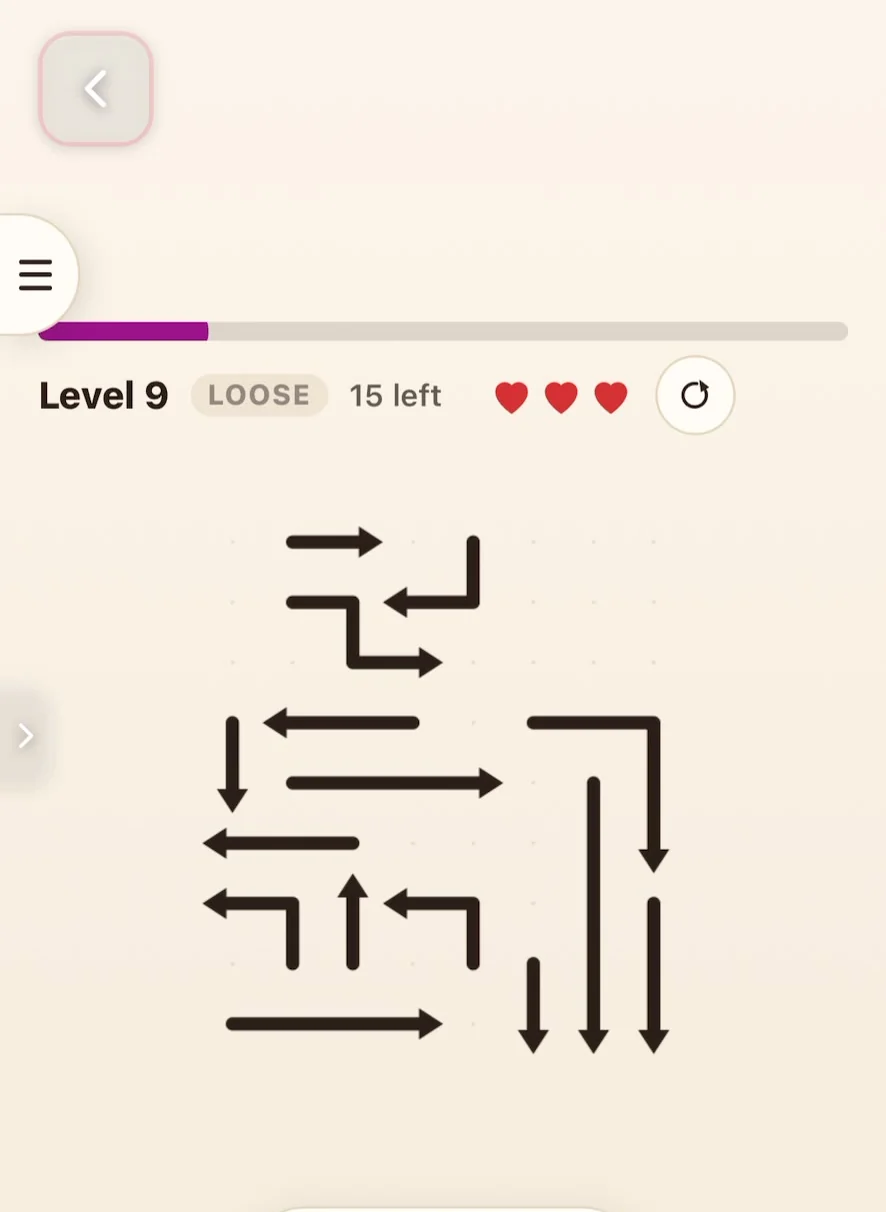
A label like that is a nice trick. Players know the easy part is over, so a harder level feels like progress, not like the game turning against them.
Flow Fill Multi: more shapes, more blocked cells
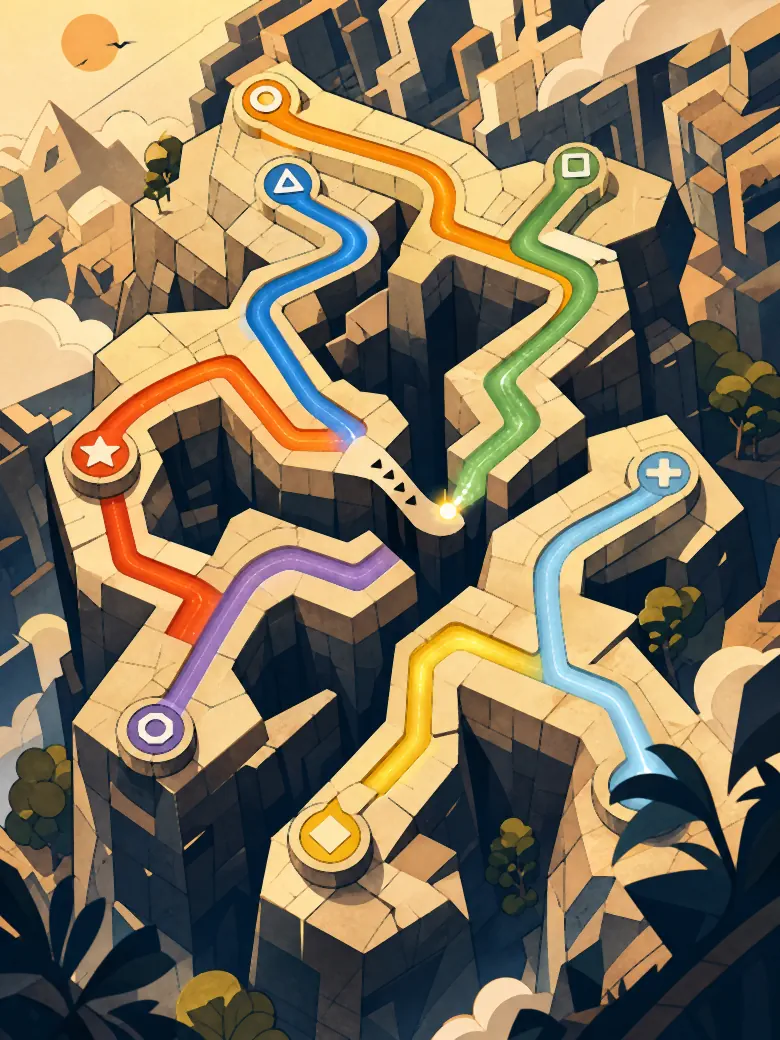
Draw lines from each shape and fill every cell on the board. Board 3 is a 4×4 grid with three shapes and two blocked cells. Board 11 is a taller grid with four shapes and three blocked cells.
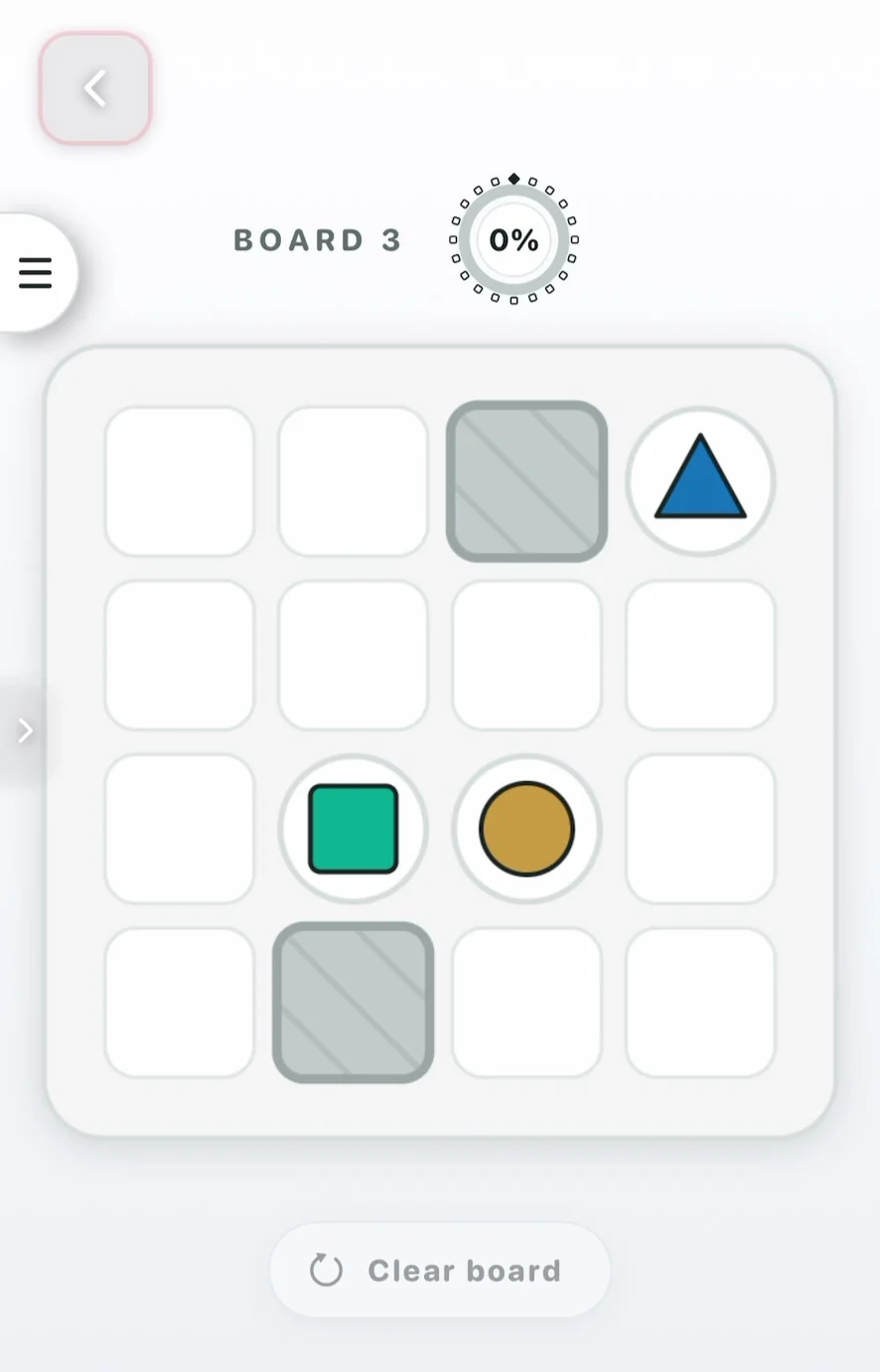
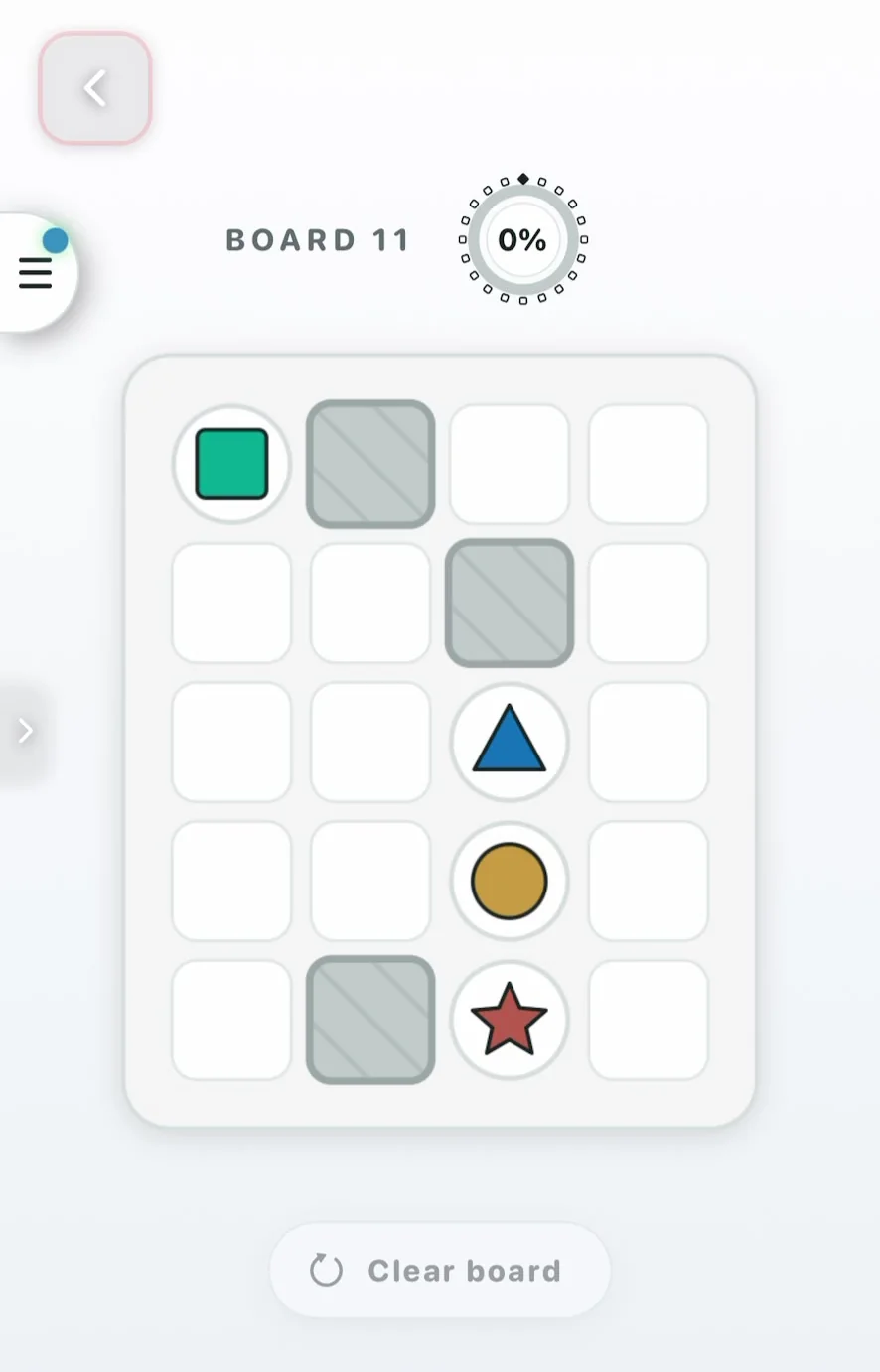
Nothing about the rules changes. The board just gets a little bigger and a little more crowded, so the same idea keeps getting deeper.
Rush Hour Jam: a new rule comes with a tip
Tap a bus to send it to the stop, where it picks up the passengers in its color. With only three parking spots, every tap counts. At level 10, the game brings in long buses, and it explains them right when they appear: a tip says "Long buses seat EIGHT" and tells you to plan for the whole color group.
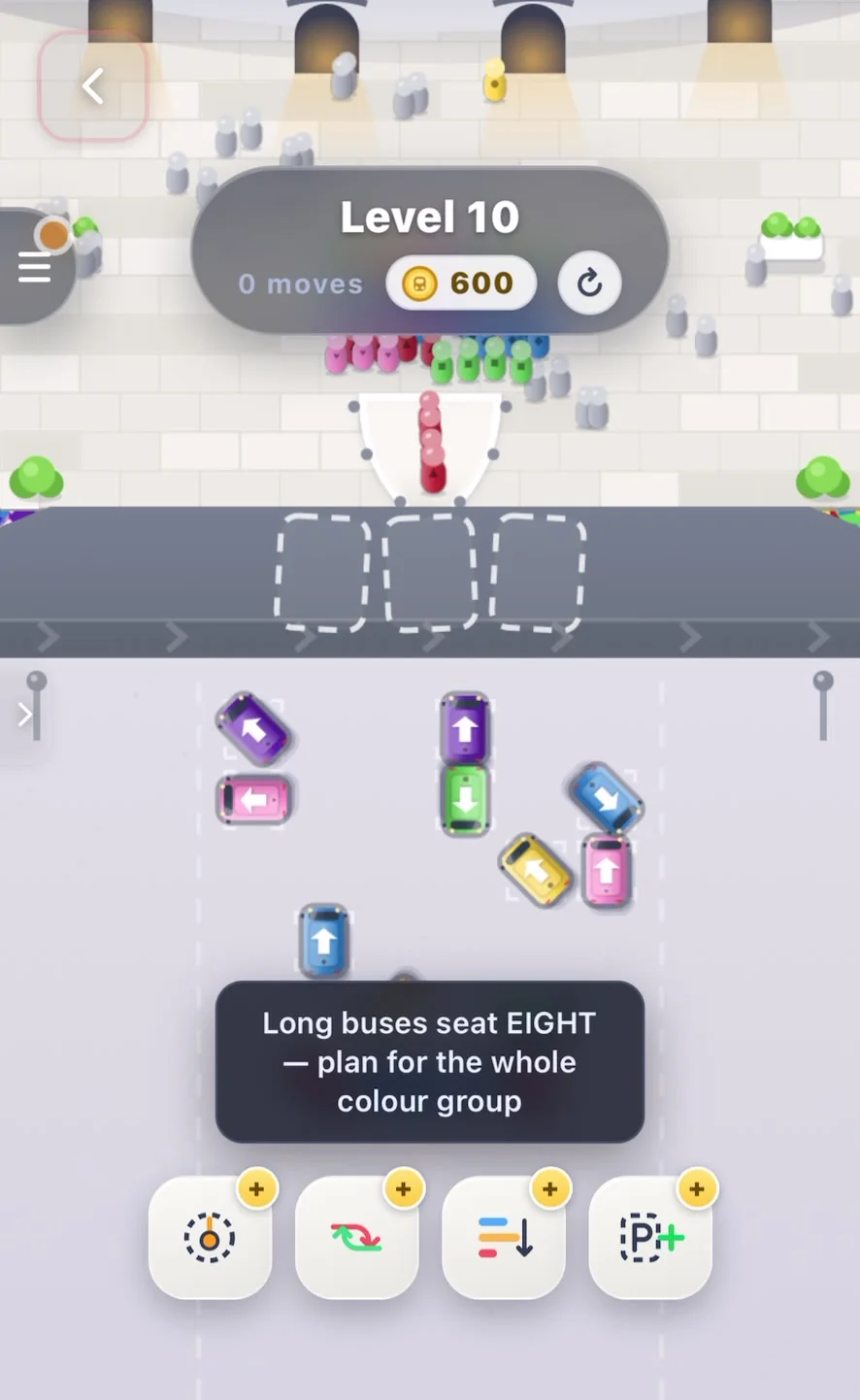
That's how you add a peak without a spike: a new challenge, plus the one sentence you need to handle it.
Three ways to get the curve wrong
Too easy, for too long. If level 10 feels like level 1, players stop paying attention. A first build on Flikk often plays it safe here, and that's fine: it's easy to fix.
A spike. One level suddenly asks for much more than the one before. Players who were having fun hit a wall and quit. If a level takes your friends ten tries when the one before took one, that's a spike.
Flat. Everything gets harder at the same speed, forever, with no breathers. It works for a while, then it gets tiring. Mix in a quicker level after a tough one, like Paint Maze and Arrow Outbreak do.
How to tune your game's curve on Flikk
Play your game for a few minutes first and notice where it feels too easy or too hard. Then open your game's page and go to Make Edits.
For a quick change, tap one of the suggestions. Depending on your game, you'll see options like Make the game easier, Make the game harder, Slow the game down, Add more levels or Add a short tutorial at the start.
For a real curve, describe it in your own words. Be specific about where it should change. A few prompts to try:
- "Make the first three levels very easy so new players learn the rules."
- "Add one new obstacle every five levels instead of making every level harder."
- "After every hard level, add a shorter, easier one."
- "When a new type of enemy appears for the first time, show one short tip that explains it."
Name the challenge, not just the level of difficulty. "Make it harder" is vague. "Make some platforms move side to side and add lasers to jump over" gave our 3D game Lava Leap real obstacles in one edit. The full story is in 8 fixes for when Flikk didn't make the game you pictured.
Each edit costs 25 Tokens and takes about 5 minutes. The version people can play doesn't change until your edit is done.
Try it now
Pick a game you made, or make one in the Create tab in about 15 minutes. Play the first five levels and rate each one from 1 (easy) to 5 (hard). If your numbers go 1, 1, 1, 1, 1 or 1, 2, 5, 5, 5, you know what to fix. Aim for something like 1, 2, 2, 3, 2, 4.
Want more design basics? Start with the most important part of game design, the core loop. A good curve only works on top of a loop that's fun to repeat.
FAQ
What is a difficulty curve in games?
It's how a game's difficulty changes as you progress. A good one starts easy, gets harder in small steps, gives you easier levels to breathe in between, and has a few big tests along the way.
What is a difficulty spike?
A level that's suddenly much harder than the one before it. Spikes make players quit, so it's better to add new challenges one at a time.
How do I make my game harder on Flikk?
Open your game's page, go to Make Edits and tap "Make the game harder", or describe exactly what should be harder, like "add a moving obstacle from level 5". Specific requests work better than "make it harder".
Should the first level of a game be easy?
Yes. The first levels teach the rules. Players should win them easily and feel good, so they want to keep going.
How many levels should a game have?
There's no fixed number. More important is that each level adds a little something. On Flikk, you can always add more later: Make Edits has an "Add more levels" suggestion.